
Disclaimer: This post contains affiliate links. As an Amazon Associate, Dirty Derailleur earns from qualifying purchases at no extra cost to you. Read our full disclosure here.
In 2026, mountain bike/ e-bike theft has reached an all-time high in the US, with professional thieves now wielding battery-powered angle grinders that can slice through a standard “hardened steel” lock in under 20 seconds. If you’ve spent $2,000 or more on your bike, a basic U-lock is no longer just a gamble—it’s a liability.
The “Insurance Gap” is real. Many US e-bike owners are shocked to find their theft claims denied because they used a lock that wasn’t on their insurer’s “Approved List.” Whether you are covered by a specialty provider like Velosurance or a standard Markel policy, your payout often hinges on one metric: The Sold Secure Diamond rating.
This guide cuts through the marketing noise to bring you the Top 10 U-locks of 2026 that actually meet US insurance mandates. We’ve ranked them by their ability to survive the dreaded angle-grinder attack, their price-to-protection ratio, and their eligibility for manufacturer-backed anti-theft payouts.
Inside this guide, you’ll find:
- The Grinder Killers: The elite new category of locks (like the Litelok X1 and Hiplok DX1000) that destroy cutting discs on contact.
- The Budget Diamond: How to get insurance-approved security for under $90.
- The Fat-Tire Fix: Pro-tips for securing oversized e-bike frames that standard locks won’t fit.
- The Registration Trap: Why 40% of riders lose their “theft guarantee” before they even lock their bike for the first time.
Bottom Line: Your lock is your insurance policy’s “fine print.” Make sure yours is written in steel (or ceramic).
Why insurance-approved bike locks matter for US riders
Your lock choice can be the difference between a paid claim and a denied one. Insurers expect a recognized security rating, clear proof of purchase, and evidence you locked your bike correctly. Meeting those rules keeps your claim valid after bikes stolen incidents.
What “insurance-approved” typically means for your policy
Most policies list accepted ratings such as Sold Secure or ART. If you show a rated bike lock, a receipt, and photos of the locked bike, you prove you followed rules. That often affects whether the insurer pays full value or reduces the payout.
Why e-bikes raise the stakes
E-bikes cost more and attract thieves because parts resell easily. That raises your deductible risk and the money you may owe if a claim is denied. Picking one of the ten insurance-accepted locks in this guide helps match coverage needs to real-world theft patterns.
| Feature | Why it matters | How it helps claims |
|---|---|---|
| Rated security (Sold Secure/ART) | Shows independent testing | Insurers accept rated locks more readily |
| Proof of purchase | Verifies ownership and model | Speeds claim approval |
| Correct locking to immovable object | Reduces opportunistic theft | Prevents denial for improper use |
Choosing a rated bike lock is an upfront cost that can save money and give real peace mind. The next section explains how ratings work and which locks resist modern grinder attacks.
Understanding Sold Secure ratings and what they signal to insurers
Sold Secure is a third-party rating riders and insurers use as a quick shortcut when judging a lock’s expected performance. It’s based on controlled testing that measures how long and what tools a lock withstands. That makes the label useful when you shop and when you file a claim.
Diamond vs Gold: the real-world difference
Diamond is the highest practical tier and targets high-risk spots and higher-value bikes. These locks are tested against heavier tools and longer attacks.
Gold often covers daytime stops and lower-risk routines. A gold-rated lock can be enough for many commutes, but it sits below diamond when grind resistance matters.
If you need more advice/information regarding the top US Bike Insurance companies before deciding on the best bike insurance for you, visit our post about the Top US mountain bike/ bicycle insurance companies to help you make the best informed decision.
How testing reflects modern theft tools
Sold Secure trials now include tests that mimic real attacks, not just simple hand tools. That is why many makers advertise grinder resistance and why the market drifted toward tougher designs.
| What Sold Secure shows | Why insurers care | How it maps to the 10 locks |
|---|---|---|
| Independent test grade | Gives a measurable standard insurers can cite | Use the grade to narrow choices by risk |
| Resistance to tools and time | Shows how long a lock delays an attack | Diamond models match high-risk needs; gold suits daily stops |
| Repeatable lab methods | Removes marketing claims from decisions | Compare specs, not just brand names |
No rating guarantees an uncuttable lock. Your locking technique, where you park, and how long you leave the bike still decide outcomes. This guide next looks at the core threat: speed-based theft, where a thief’s currency is time and your lock’s job is to waste it.
The theft reality check in the US: angle grinders changed the game
A new breed of cordless tools has reshaped how thieves attack bikes on city streets.
Cordless angle grinders are now a thief’s favorite because they are fast, portable, and brutal against old-style designs. They are loud but brief, so a thief can finish an attack before anyone reacts.
Why cordless angle grinders are favored
Grinders chew through many locks faster than bolt cutters. They run on batteries, so the attacker needs no cord or setup. That mobility makes public racks high-risk targets, especially for expensive bike and e-bike models.
What “angle-grinder resistance” looks like in testing
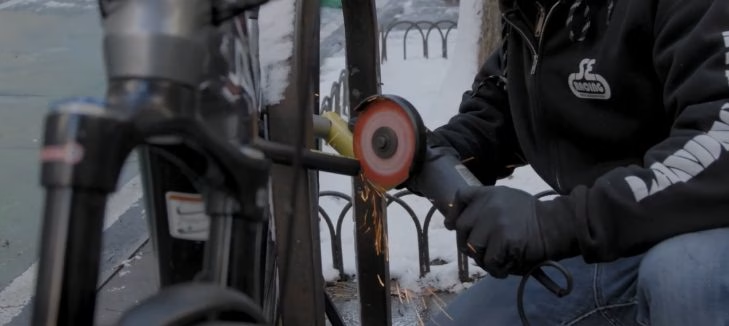
Resistance doesn’t mean uncuttable. Tests show resistant locks stall cutting, ruin discs, or force multiple attempts. The best designs consume time and tools, turning a quick job into a messy chore.
How long “enough time” needs to be for real deterrence
In street reality, every extra minute helps. If a lock forces a noisy, prolonged cut, a thief often moves on to an easier score. Good resistance buys you time, noise, and attention — the real protection that prevents bikes stolen incidents.
| Threat factor | What the lock must do | Why it matters |
|---|---|---|
| Cordless grinder attack | Slow cuts, consume discs, stall attacker | Increases time and noise; raises chance thief flees |
| Positioning & leverage | Reduce attack angles; lock close to immovable object | Limits space for tools, speeds up defense |
| Deterrence vs invincibility | Make theft harder than next target | Practical protection that protects high-value bikes |
Several locks in this guide advertise angle-grinder-resistant features because they are built to stall grinders and eat discs. That matters most if you lock an expensive bike or e-bike in high-risk spots. Next, you’ll learn how to match that resistance to your daily routine so you carry the right level of protection without overburdening yourself.
How to choose the best bike lock for your bike, your city, and your routine
A smart lock choice balances the security level you need with real-world habits you’ll keep. Start by mapping where you park, how long you leave the bike, and whether you bring it inside at night.
Match security to risk
Quick stops need lighter, easier-to-carry options. Campus parking calls for mid-level rated locks. Overnight street locking demands maximum resistance and often a heavier model.
Size, reach, and proper capture
Measure the rack and your frame. A strong lock that won’t fit the rack is useless. Aim to capture the frame and a wheel when you lock bike to a post.
Weight, carry, and practical use
Heavy locks give protection but you must carry them. Think frame mount, bag, or backpack. If you won’t carry it, you won’t use it—wasting money and security.
| Risk | Recommended models | Why |
|---|---|---|
| Quick stops | Evolution Mini, Bulldog | Light, easy to carry |
| Daytime/campus | Hiplok Dx+, Hiplok DX | Balanced reach and resistance |
| Overnight/public | Kryptonite New York, Abus Granit | Highest resistance, diamond-level options |
For e-bike owners, prioritize internal space for thicker tubes and higher resistance. Use a second cable or small chain if your U-lock can’t grab both frame and wheel. Now that you know the right level, size, and carry options, you’re ready to compare the shortlist in detail.
Top 10 Insurance-Approved U-Locks for US Bikes & E-Bikes: quick comparison
Choose a lock that balances real-world resistance, day-to-day carry, and a rating insurers trust. Below is a fast roundup to help you shortlist. Each line names the model and why you might buy it.
PLEASE NOTE:
While many U-locks—like the Kryptonite Evolution series—come bundled with a steel flex cable, it is vital to understand that the cable itself is NOT insurnance-approved.
In the eyes of US insurers and lock manufacturers, the cable is a “secondary deterrent” only. If a thief snips the cable to steal your front wheel or seat while your U-lock remains intact, your insurance claim will likely be denied, and you will not be eligible for manufacturer theft protection (ATPO) payouts. Always ensure your “Diamond” or “Gold” rated U-lock is securing the most valuable part of your bike (the frame and rear wheel) to the rack.
Quick model rundown
Litelok X1:
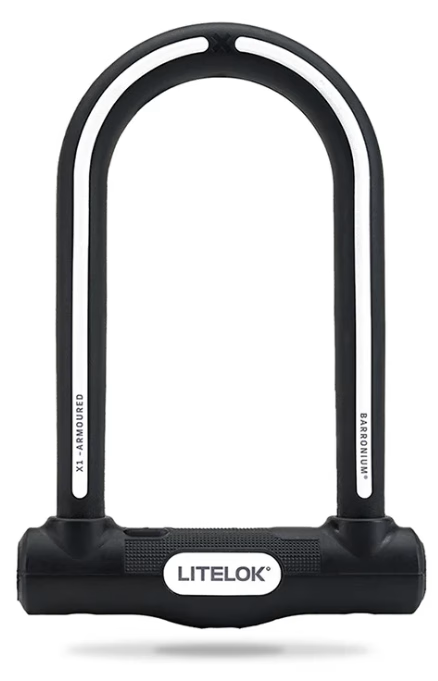
The X1 is the most practical high-security lock on the market in 2026. It strikes the perfect balance between weight (3.7 lbs) and elite angle-grinder resistance. It is the “Goldilocks” choice for e-bike owners who want Diamond-rated security without the massive bulk of a motorcycle lock.
Litelok X3:
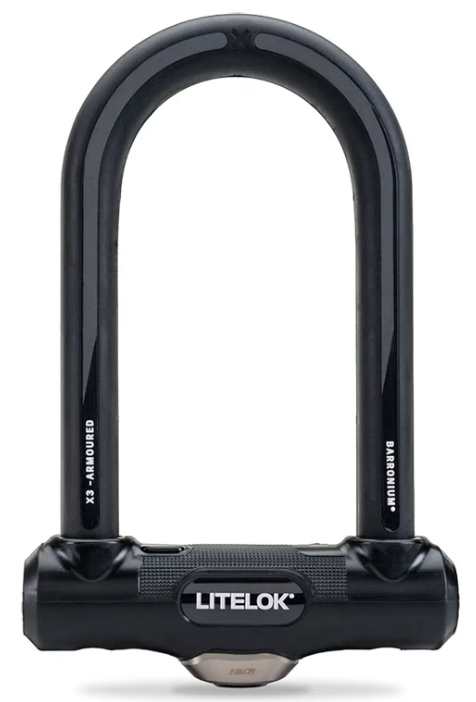
If the Litelok X1 is a shield, the X3 is a bunker. It is significantly thicker and heavier than its smaller sibling, utilizing a reinforced Barronium® core that is engineered to deplete multiple angle-grinder discs before the shackle even flinches. In 2026, this stands as the gold standard for riders who refuse to compromise. While it carries a premium price and a bit more heft, it is often the only lock that high-value insurers will fully endorse for overnight storage in high-theft urban “red zones.”
Hiplok D1000:
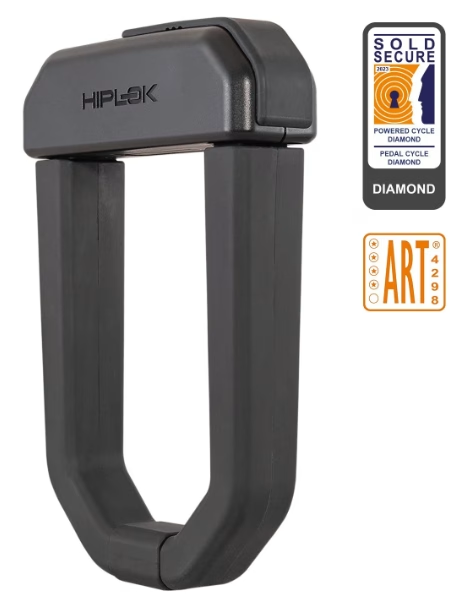
The D1000 is a masterpiece of compact security and is the lock that started the anti-grinder revolution. Utilizing Ferosafe—a specialized graphene composite—this lock is designed to physically wear down and shatter multiple angle-grinder discs upon contact. While it is smaller than the newer DX1000, its compact footprint makes it the most “carry-friendly” elite lock on the market. In the eyes of US insurers, this is the “Gold Standard” for proof of reasonable care. If you are a high-mileage commuter who wants maximum security that fits in a back pocket or a small frame bag, this is your lock.
Hiplok DX/ Hiplok DX+:
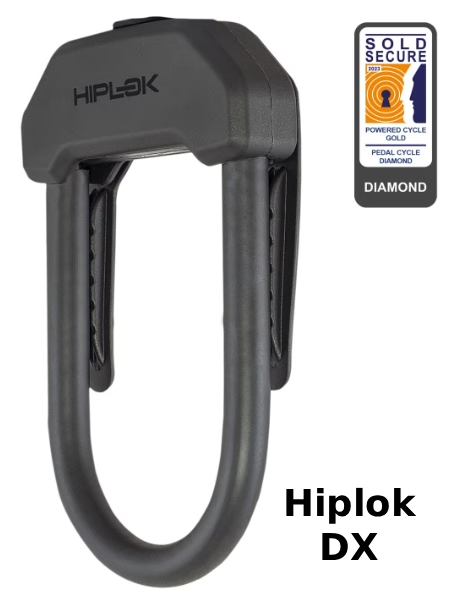
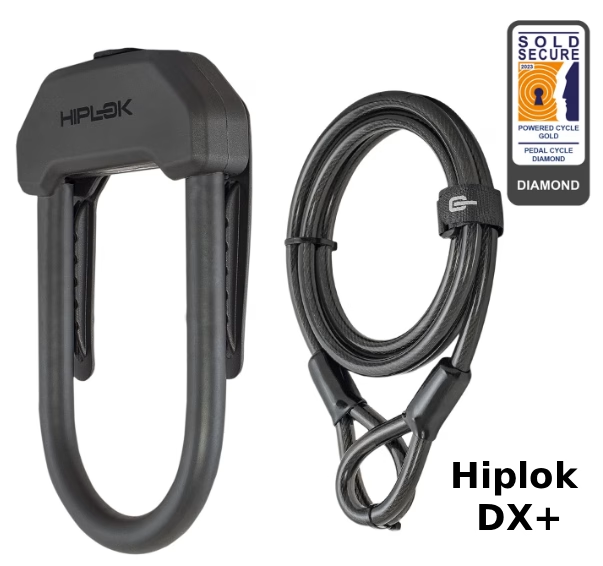
The Hiplok DX and its “big brother,” the DX+ (which includes a 2-meter steel cable), occupy a unique spot in the 2026 market. While they aren’t built with the expensive anti-grinder composites of the 1000-series, they are the gold standard for “wearable” insurance-approved security. Its standout feature is the patented “Clip+Ride” system, allowing you to slide the lock onto a belt or bag strap without a heavy frame mount, or store in a backpack.
Kryptonite New York Diamond:
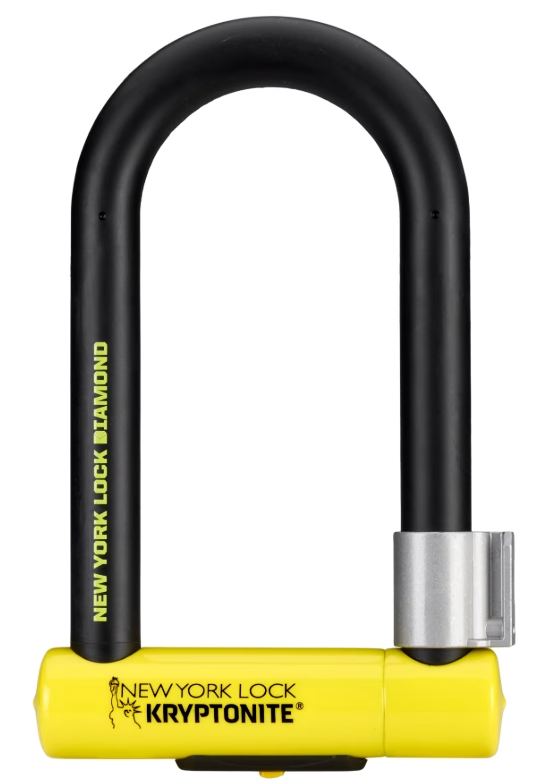
The Kryptonite New York series is the “Old Guard” of elite, Diamond-level security. Built with a massive 16mm hardened MAX-Performance steel shackle, it is designed to defeat bolt cutters and leverage attacks through sheer mass. While an angle grinder will eventually cut it faster than a ceramic Litelok, Kryptonite offsets this risk with the most robust Anti-Theft Protection Offer (ATPO) in the US. If you want a brand that insurers have trusted for decades and a payout guarantee of up to $5,000, this is the “safe bet.”
Kryptonite Evolution Mini-7 + 4 ft Flex Cable:
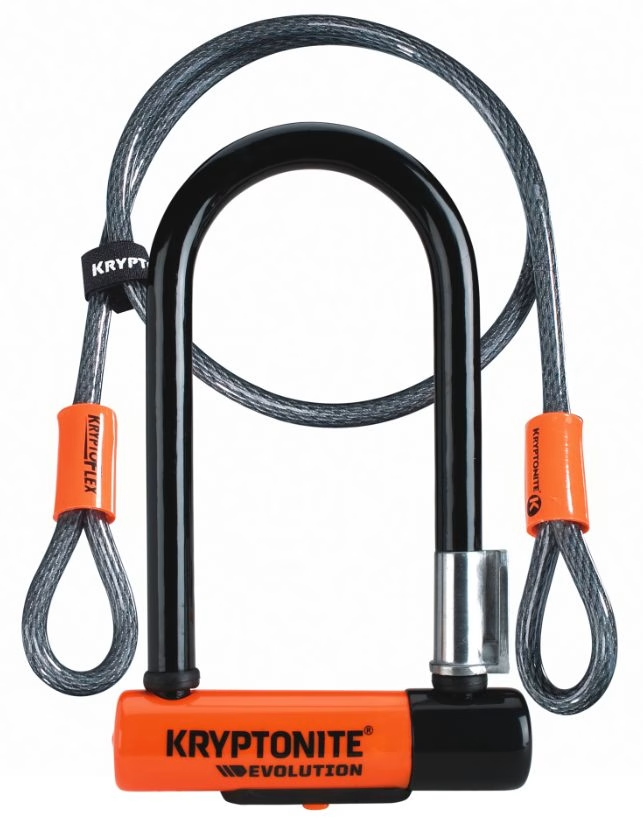
The Evolution Mini-7 is the “Swiss Army Knife” of insurance-approved locks. It features a 13mm hardened steel shackle that provides solid resistance against hand tools and small bolt cutters. While it isn’t designed to stop a power-tool attack like the Litelok or Hiplok, it is Sold Secure Gold rated, which is the minimum requirement for many entry-level US e-bike insurance policies. The included 4-foot flex cable is the real selling point here, allowing you to secure your front wheel or accessories while the U-lock anchors the frame.
Abus Granit X-Plus 540:
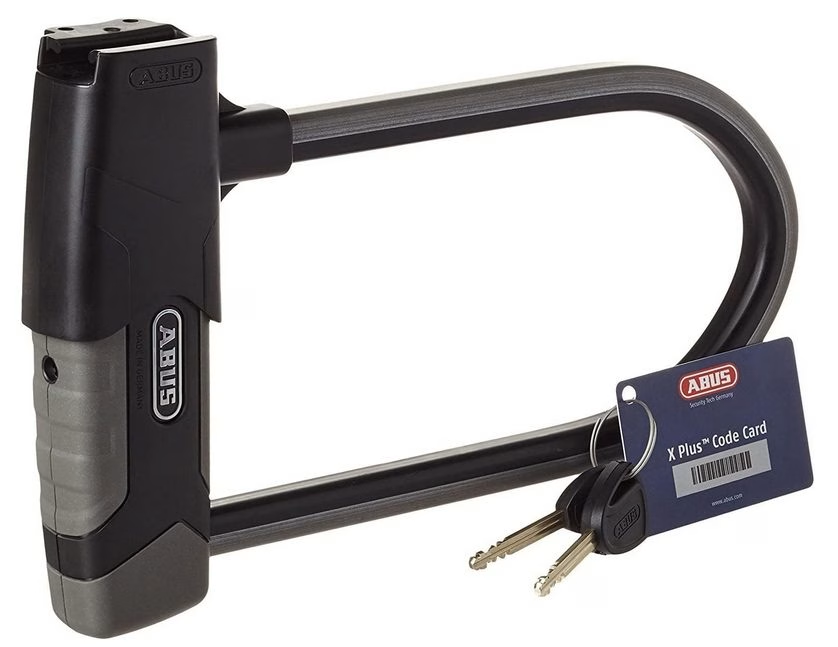
The Granit XPlus 540 is the smart choice for discerning e-bike owners, featuring a patented square parabolic shackle that prevents twisting even after a single cut. Its standout feature is the highly pick-resistant XPlus cylinder. While it lacks specialized anti-grinder composites, its tempered steel construction, low weight, and Diamond-rated security make it an excellent everyday lock.
OnGuard Bulldog STD Combo:
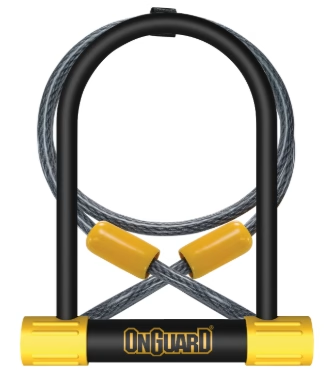
The Bulldog STD Combo is the “convenience king” of the insurance-approved world. It features a 13mm hardened steel shackle and OnGuard’s X2P Double Bolt mechanism, which locks the shackle on both sides to prevent twisting attacks, along with a 4′ braided steel cable for extra locking options. While it lacks the extreme thickness of the New York series or the ceramic tech of the 1000-series, it is one of the few combination locks to achieve a Sold Secure Silver rating. This makes it a “safe bet” for lower-risk areas where your insurance policy requires a reputable brand and a certified rating, but your daily priority is never having to worry about a lost key.
OnGuard Pitbull STD 8003:
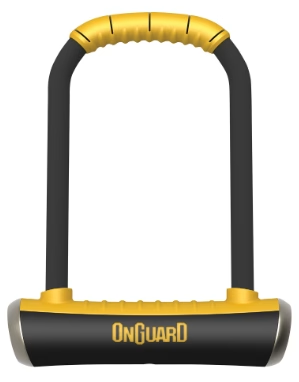
The Pitbull STD is arguably the best “bang for your buck” in the entire US lock market for 2026. Despite its mid-range price, it frequently carries a Sold Secure Diamond rating, placing it in the same league as locks costing twice as much. It features a 14mm hardened steel shackle and the X4P Quattro Bolt mechanism, which secures the shackle to the crossbar at four separate points. This makes it incredibly resistant to prying, jacking, and twisting. While it isn’t “angle-grinder resistant” like the elite $200+ locks, it is thick enough to frustrate most hand-tool attacks and satisfy the most stringent insurance requirements.
Product snapshot & standard specs
| Model | Sold Secure / Rating | Shackle tech & weight | Carry / Mount |
|---|---|---|---|
| Litelok X1 | Gold / high | Composite tube, ~ 2.2–2.6 lb | Frame mount / bag |
| Kryptonite New York Diamond | Diamond | Hardened steel, ~ 4–6 lb | Frame bracket |
| Hiplok D1000 | Diamond / high | Steel core, compact, ~ 2.0 lb | Wearable / belt |
At-a-glance use-case winners
Best overall: Litelok X1. Great mix of security and carry.
Best upgrade: Litelok X3. Extra reach and resistance.
Best compact premium: Hiplok D1000. Tough in a small package.
Best heavyweight deterrent: Kryptonite New York Diamond. Maximum street resistance.
Best budget insurance-friendly: OnGuard Bulldog, Kryptonite Evolution Mini, Pitbull 8003. Good value for money on daytime stops.
Note: some riders consider a chain lock or wearable locks as alternatives. We focused on D-style U-locks because they offer the best mix of insurer recognition, weight-to-resistance, and practical use for most city riders.
Price and spec comparison table for these insurance-approved U-locks
Knowing real-world prices helps you pick the lock that fits your budget and security needs. Below is an estimated US street price grid with specs so you can compare cost, weight, and carry options quickly.
| Model | Rating | Shackle tech & weight | Reach & carry | Estimated US street price (value signal) |
|---|---|---|---|---|
| Kryptonite New York Diamond | Diamond | Hardened steel, 4–6 lb | Small internal; frame bracket | $325–$360 (traditional high-security) |
| Hiplok D1000 | Diamond | Steel core/composite sleeve, ~2.0 lb | Compact wearable; limited reach | $330 (premium anti-grinder) |
| Litelok X3 | Gold / high | Composite/mesh, ~2.5–3.0 lb | Good clearance; bag/frame mount | $430 (anti-grinder composite) |
| Abus Granit X-Plus | Gold / Diamond variants | Hardened steel, ~3.5–4.5 lb | Generous reach; bracket mount | $155 (reach + build quality) |
| Hiplok Dx+ Cable | Gold | Hardened shackle, ~2.8–3.2 lb | Wearable/belt carry; mid reach; 1m cable | $110-$125 (balanced value) |
| Hiplok DX Maximum Security | Gold / high | Reinforced steel, ~3.0 lb | Wearable; slightly larger clearance | $110 (high-value commute) |
| OnGuard Bulldog STD Combo | Gold / rated | Hardened steel, ~2.5–3.5 lb | Standard reach; bracket or bag | $50–$90 (budget insurance-friendly) |
| Kryptonite Evolution Mini-7 | Gold | Hardened steel, ~2.0–2.5 lb | Compact; mount bracket; includes 4′ flex cable | $100 (compact, insurer-friendly) |
| OnGuard Pitbull STD 8003 | Gold | Hardened steel, ~3.0–4.0 lb | Standard reach; sturdy body | $60-$65 (everyday value) |
| Litelok X1 | Gold | Composite mesh, ~2.2–2.6 lb | Flexible reach; frame mount or bag | $260 (best balance of money vs security) |
Why “estimated US street prices”? Retail listings, seasonal promos, and supply shifts move prices weekly. These ranges reflect typical market windows so you can budget sensibly.
Budget tip: If your bike is high-value, especially an electric model, spending more on a strong lock often saves you more money over time. Treat the lock as insurance you carry every day.
Angle-grinder-resistant U-locks for maximum peace of mind
Modern grinders forced lock makers to engineer shackles that blunt cutting discs and waste an attacker’s time. If you want real peace of mind when you leave your bike on the street, focus on designs that destroy or wear down grinder discs rather than just resist shear.
What makes ceramic/composite shackles harder to cut
These shackles use a tough ceramic or composite layer fused to a steel core. When a disc hits the surface it dulls quickly, sparks, and eats away the cutter. That extra resistance buys you crucial time and noise, which often stops thieves before the lock fails.
If you lock daily in a big city, near transit hubs, or leave your bike overnight, spending more makes sense. Models like the Litelok X1 (ceramic composite fused to a 16 mm shackle) and Litelok X3 (Barronium composite) are built to consume discs.
| Model | Key tech | Why pay more |
|---|---|---|
| Litelok X1 | Ceramic composite on 16 mm shackle | Slows cuts; accessible balance of weight and protection |
| Litelok X3 / Hiplok D1000 | Barronium composite / reinforced core | Higher resistance in grinder tests; pay more for added time |
| Kryptonite New York Diamond | Hardened steel, heavyweight design | Bring-everything deterrent; Diamond-level security and mass |
Simple decision rule: if theft risk is high or your bike value is high, choose one of these. The realistic goal is to make thieves burn time, burn discs, and leave.
Traditional high-security U-locks that insurers still love
Not every rider needs the newest anti-grinder tech. A well-made, rated steel lock often fits daily routines better. These classic models balance portability, proven protection, and insurer acceptance.
When a non–anti-grinder choice makes sense: daytime commutes, quick errands where your bike stays in view, office racks with cameras, or secure storage at home. In these settings, a Gold or Sold Secure rated device gives solid protection if you lock correctly.
What insurers care about: the recognized Sold Secure rating, a receipt, and correct use. They value documented security level more than whether your lock uses composite or ceramic layers.
| Model | Best use | Why choose |
|---|---|---|
| Abus Granit X Plus | Awkward racks & reach | Strong build and good clearance |
| Hiplok Dx+ / DX | Daily wear & city commute | Wearable carry and balanced security |
| Kryptonite Evolution Mini-7 / OnGuard picks | Quick stops & value | Lightweight, insurer-friendly ratings |
Set expectations: a determined grinder attack can still win. Compensate with smarter parking, shorter parking time, and layering like indoor storage or a tracker. Later sections dive into each model so you can pick the right balance of carry and protection.
Best overall pick for most US riders: Litelok X1 U-Lock
If you want one reliable lock that fits daily life and still deters serious thieves, pick a design that balances weight, reach, and real-world resistance.
Why it’s the smart everyday choice
Litelok X1 gives strong security without the top-tier weight or price. It uses a ceramic composite fused to a 16 mm shackle and weighs about 3.7 lb (1.7 kg). The internal size (3.97 x 7.7 in) fits most frames and many e-bike frames comfortably.
What tests say vs older heavyweight designs
Independent trials showed the X1 took more than four times longer to cut than a well-known heavy diamond model. Early cutting attempts dulled discs and forced slow second-side work. In street terms, that means the lock wastes the attacker’s discs and time, raising the odds they quit and move on.
| Model | Key spec | Real-world edge |
|---|---|---|
| Litelok X1 | 16 mm ceramic composite; 3.7 lb | Grinder-focused resistance; good clearance |
| Kryptonite New York | Hardened steel; heavier | Mass deterrent; more weight |
| Litelok X3 | Higher composite tech; larger | Extra resistance and reach; higher price |
Who should pick it: city commuters, riders who park at shops or gyms, and anyone who wants reliable protection without spending extra money on ultra-heavy gear. Carry mounts and bag options make it practical so you can actually use the lock every day.
Upgrade pick for tougher locking spots: Litelok X3 U-Lock
For repeated street parking in risky areas, a stronger lock that buys you noise and time matters most.
The Litelok X3 is the step-up choice when you need more resistance and reach than the X1. Cycling Weekly lists it as Sold Secure Diamond; it uses a Barronium ceramic composite and weighed about 2.2 kg (4.8 lb) in tests. That tech slowed grinder attacks and dulled discs, increasing the chance an attacker quits.
Why pay more: you get larger usable clearance (roughly 19.5 x 10 cm), stronger real-world security, and a form factor you can still carry daily. The extra price buys more time during an attack, which is the practical defense that stops many thefts.
Who should choose the X3 and who should not
Choose the X3 if you park long hours in transit hubs, overnight on-street, or in high-theft neighborhoods. Its Diamond rating and heavier build suit repeat exposure to serious tools.
Avoid it if you never leave your bike out of sight or if weight and price matter more than maximum resistance. In those low-risk uses, the X1 or a classic Sold Secure gold-rated option often gives better value.
| Feature | Why it matters | Practical note |
|---|---|---|
| Sold Secure Diamond | Highest practical insurer signal | Better claim support in high-risk theft scenarios |
| Barronium composite | Slows grinder discs | Buys critical time and noise |
| Size & weight | Reach fits awkward racks; heavier to carry | Acceptable daily use if you value protection |
Premium compact powerhouse: Hiplok D1000 U Lock
Compact but brutal describes the Hiplok D1000 well. It’s built to stall grinders, eat cutting discs, and force thieves to spend far more time than they planned. That makes it a go-to if you need serious resistance without carrying a full heavyweight lock.
Who should choose this option? Pick the D1000 if you park in high-risk spots, ride an expensive bike, and want a lock that removes easy leverage points. Its smaller shackle reduces attack angles and makes cutting awkward on crowded racks.
There are tradeoffs. The compact size can struggle around wide posts or unusual racks. You must be precise when locking so the frame and an immovable object are captured. Good placement doubles the D1000’s real-world security.
Practical note: the D1000 sits in the premium price tier alongside the X3 and the New York Diamond. Compare reach, weight, and cost to decide which balance of portability and deterrence fits your routine.
| Feature | Why it matters | Practical effect |
|---|---|---|
| Compact shackle | Reduces leverage | Makes attacks awkward; forces awkward angles |
| Grinder resistance | Consumes cutting discs | Buys time and noise that deter thieves |
| Premium price tier | Higher upfront cost | Better protection for high-value bikes |
Top-tier “bring everything” protection: Kryptonite New York Diamond Bike U Lock
When you need absolute street deterrence, you pick a lock that makes an attacker give up before they finish. The Kryptonite New York Diamond is built as a no-nonsense deterrent. It signals true Diamond-level security and heavy-duty intent.
What Diamond-level security means in practice
Diamond-level shows the lock is tested to resist advanced tools longer than typical options. In real tests, designers expect grinders to dull discs and stall attacks. That extra resistance buys crucial time and raises the chance a thief quits.
When weight is a fair trade for maximum deterrence
The tradeoff is obvious: the New York model is heavy. If you commute light every day you will notice it. But if your bike is expensive, the extra bulk is a fair price for serious protection.
Choose this lock for overnight street parking, transit hubs, busy city centers, or any place thieves strike fast. Riders often pair the Kryptonite New York with a light secondary chain or a wheel cable to layer protection.
| Feature | Practical effect | Price range (US street) |
|---|---|---|
| Kryptonite New York Diamond | Hardened steel, diamond-rated resistance; stalls cutting discs | $325–$360 |
| Primary use | Maximum deterrent for long or overnight parking | Best for high-risk spots |
| Ecosystem | Reputation, spare keys, bracket mounts, compatible chain add-ons | Pair with a short chain for wheel/seat protection |
Proven insurer-friendly favorite: Abus Granit X-Plus U-Lock
When you face awkward racks or odd posts, the Abus Granit X Plus often wins because it gives usable reach without huge weight. The design balances internal space and strong construction so you can secure the frame and a wheel properly.
Why reach and build quality matter in tight spots
More internal room means you lock the frame instead of trusting a wheel. That practical reach prevents leverage attacks and avoids risky shortcuts that reduce security.
Key features riders notice day-to-day
Protective coating keeps paint safe. A sealed cylinder and keyhole cover cut grime and water issues so the key turns smoothly after rain.
| Feature | Why it matters | Rider benefit | Price band |
|---|---|---|---|
| Generous internal clearance | Fits varied frame shapes and posts | Better, correct lockups | $120–$200 |
| Hardened steel shackle | Proven Sold Secure construction | Trusted security for insurers | Premium |
| Sealed cylinder & coating | Reduces corrosion and jams | Smoother daily use; protects your bike finish | Value over time |
| Consistent build quality | Recognized by reviewers and policies | Reliable option when you must lock bike at awkward anchors | Mid-to-high |
In short, choose the Granit X Plus when you need a traditional, Sold Secure–rated option that fits real-world locking challenges. It’s a smart pick if you want a premium steel lock that helps you lock bike correctly every day.
Solid options for everyday locking: Hiplok Dx+ U Lock and Hiplok DX Maximum Security U Lock
If you lock up several times a day, usability and quick key action matter as much as raw strength. These Hiplok options are built as daily drivers that balance real security with carry comfort.
Which one fits your routine better
Hiplok Dx+ is lighter and wearable. It suits riders who carry the lock on a belt or in a pack. It gives good clearance to capture frame and wheel on common racks.
Hiplok DX Maximum Security is slightly heavier and adds tougher materials in the shackle and body. Choose it if you park longer or in higher-risk areas and want a higher security level without massive weight.
What to check before you buy
Inspect the lock body for solid steel construction and firm welds. Look for barrel protection and a sealed keyway to avoid jams in rain. A smooth key turn matters if you lock in the dark or cold.
| Model | Carry | Clearance | Price band (US) |
|---|---|---|---|
| Hiplok Dx+ | Wearable / lighter | Mid (fits most racks) | $110–$125 |
| Hiplok DX Maximum Security | Wearable / sturdier | Mid-large (better frame capture) | $110–$160 |
Practical tip: pair either lock with a quick cable or wheel security to layer protection. That gives strong anchoring for your frame and reduces theft risk while staying day-to-day practical.
Budget-friendly insurance-approved picks: OnGuard Bulldog STD Combo U Lock, Kryptonite Evolution Mini U Lock, OnGuard Pitbull STD U Lock 8003
When your routine is daytime errands and known racks, a well-rated, lower-cost lock can protect your bike without extra bulk. These three choices give you a recognized rating without premium price tags.
Best value when you still need a recognized security rating
OnGuard Bulldog STD Combo — Gold-rated convenience with a combo code. Price: $50–$90. You gain no-key access but trade key security and may need code management over time.
Kryptonite Evolution Mini — Compact Gold-rated mini. Price: $60–$100. Small shackle cuts leverage and is easier to carry, but check fit before buying.
OnGuard Pitbull STD 8003 — Standard shackle and sturdier reach. Price: $60–$65. Better fit for varied racks while still budget-friendly.
Combo vs key, mini vs standard, and where they shine
Combo vs key: combos avoid lost keys, but keys give slightly better long-term reliability. Manage your code securely.
Mini vs standard: minis resist leverage but “won’t fit” on wide posts. Measure rack clearance and compare internal dimensions before you buy.
| Model | Rating | Price (US) | Best use |
|---|---|---|---|
| OnGuard Bulldog STD Combo | Gold | $50–$90 | Quick errands, campus |
| Kryptonite Evolution Mini | Gold | $60–$100 | Commute, wearable carry |
| OnGuard Pitbull STD 8003 | Gold | $60–$65 | Daytime parking, office racks |
Practical tip: pair any budget lock with a short cable to secure wheels when the shackle can’t capture both frame and wheel. That small extra expense protects wheels and stretches your security dollars.
How to lock your bike like you actually want to keep it
How you lock your bike matters more than the model you buy. Follow a simple routine and you get better protection, help your insurance claim, and waste a thief’s time.
Lock the frame first, then protect wheels the smart way
Always lock the frame to an immovable object. Capture the down tube or rear triangle so the frame is secured, not just a wheel.
Use a secondary cable or short chain to secure the wheels when one lock can’t reach both. A thin cable is lightweight and stops quick wheel thefts without adding much carry hassle.
Leverage and placement: make the lock harder to attack
Keep the shackle tight to the frame and rack and minimize empty space inside the U. Less space reduces leverage for pry bars and cutters.
Avoid letting the lock rest on the ground. Ground contact gives cutters better angles and steadier footing for an attack.
Layering security for insurance and peace of mind
Layer smartly: rated lock + secondary cable/chain + parking choice + photos/serial numbers + tracker.
For a two-minute coffee, use the main lock and a quick cable. For a class, add a chain or wearable locks. Overnight, pick a diamond-rated spot or bring the bike inside. These steps support claims and reduce theft risk.
| Stop | Action | Why it helps |
|---|---|---|
| Frame | Lock to immovable object | Meets insurer rules and secures the bike core |
| Wheels | Add cable or short chain | Prevents easy wheel theft without heavy carry |
| Evidence | Photo, receipt, serial, tracker | Speeds insurance claims and recovery |
Pro-Tips: Locking Fat-Tire & Mid-Drive E-Bikes
Standard U-locks are often 4 inches wide, but e-bike tires are now 4-5 inches wide. Here is how to ensure your lock actually fits.
1. The “Sheldon Brown” Modified Technique
- The Strategy: Instead of trying to go around the massive 4-inch tire and the frame, go through the rear wheel (inside the rear triangle of the frame).
- Why it works: Because the wheel is captured within the frame’s rear triangle, a thief cannot remove the wheel to steal the bike.
- Insurance Note: Most US insurers accept this as “securely locked,” but check your policy to ensure they don’t mandate the lock pass through the “main frame tube.”
2. Mind the Mid-Drive & Battery Downtube
- The Bulk Problem: Modern e-bikes have oversized “downtubes” to house the battery.
- The Solution: If your U-lock is too short, lock through the seat tube (the vertical bar under the saddle) to the rack.
- The Lock Choice: The Abus Granit 2500 or Kryptonite NY Standard offer longer “shackle reach” than “Mini” versions.
3. The “Secondary Lock” Strategy for Fat Tires
- U-Lock + Heavy Chain: Use your Sold Secure Diamond U-lock to secure the frame to the rack, and a secondary 10mm+ chain to loop through the fat tires.
- Insurance Tip: Always ensure the “primary” lock (the U-lock) is the one meeting the insurance company’s specific security rating.
4. Securing the “Brain” and the Battery
- The $500 Component: U-locks don’t protect the battery.
- The Pro Tip: If your battery has a built-in lock, it is usually “low security.” Always take your battery with you in high-theft areas, and remove your digital display/controller if it’s detachable.
The 2026 Lock Registration Checklist
Pro Tip: Set a calendar reminder the day you buy your lock. If you miss the registration window (15–30 days), you cannot sign up later.
1. Kryptonite ATPO Registration (30-Day Window)
Kryptonite updated their pricing and terms in late 2025. To qualify for up to $5,000 in coverage, follow these steps:
- Step 1: Gather Your Documents. You need a digital copy of your bike’s itemized bill of sale and your lock’s itemized receipt. (Note: Third-party/private seller receipts are generally not accepted).
- Step 2: Take a Photo. You must upload a photo of your actual bike (not a stock photo from the internet) to prove ownership and condition.
- Step 3: Find the Key Number. This is stamped on the metal blade of your keys. Record this immediately; if you lose your keys before registering, you’re locked out of the program.
- Step 4: Pay the Fee. As of 2026, coverage for 1 year is $34.99 and 2 years is $54.99.
- Step 5: Register Online. Visit the Kryptonite ATPO portal.
2. OnGuard Anti-Theft Program (15-Day Window)
OnGuard has one of the strictest windows in the industry. You only have 15 days from the date of purchase to register.
- Step 1: The “Manual” Requirement. In many regions, OnGuard still requires you to mail in a physical registration form along with a copy of your receipts. Check the paperwork inside your lock box immediately.
- Step 2: Key Code Card. OnGuard locks come with a specific “Key Code Card.” Do not lose this; you need the number for the registration form.
- Step 3: Check the “Power Tool” Clause. Read the 2026 fine print carefully. Traditionally, OnGuard did not cover thefts involving power tools. If you bought the RockSolid (AGR) lock, verify that this specific model has updated terms to cover grinder attacks.
- Step 4: Insurance Disclosure. OnGuard often requires you to list your primary insurance provider (Renters/Homeowners) during registration, as they usually act as “secondary” coverage to pay your deductible.
3. The “Theft Day” Protocol (If the worst happens)
If your bike is stolen, your “Approved” status depends on what you do in the first 72 hours:
- Police Report: File a report within 24–72 hours (varies by brand).
- Notify the Lock Company: You must notify Kryptonite/OnGuard within 7 days.
- Recover the Lock: You must have the broken lock to send back to the manufacturer as evidence. If the thief took the lock with them, the claim will almost certainly be denied.
- Insurance First: If you have Velosurance or Markel, notify them before the lock company, as the lock company will ask for your insurance claim number.
Conclusion
A good lock is the tool that makes theft not worth a thief’s time. Match your risk, carry needs, and insurer rules to pick one of the models compared above.
The guide covers these options: Litelok X1, Litelok X3, Hiplok D1000, Hiplok Dx+/DX, Kryptonite New York Diamond, Kryptonite Evolution Mini, Abus Granit X Plus, OnGuard Bulldog STD Combo, OnGuard Pitbull STD 8003, and Litelok X1 again as a key everyday pick. Prices and specs are shown in the comparison table so you can budget.
Use Sold Secure ratings as an insurance signal and remember angle grinders changed theft tactics. If you’re like most riders, start with the Litelok X1. Upgrade to the X3, D1000, or New York Diamond for higher risk. For lower-risk routines, choose a proven high-security steel model.
Final step: measure your rack, pick the right shackle size, and commit to a locking routine that secures frame and wheels. That simple habit buys real protection and peace mind.