
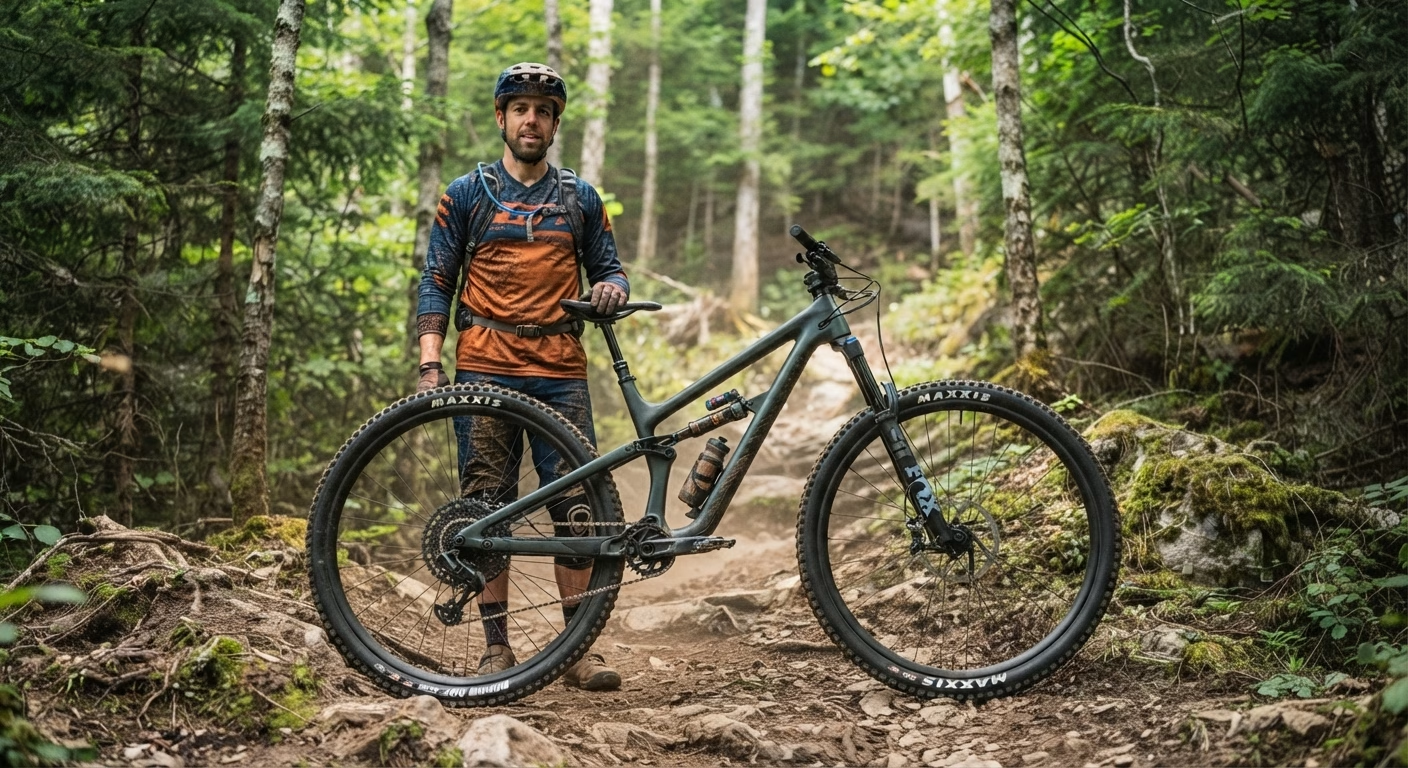
Please note: In this article, we will be taking a tongue-in-cheek look at the latest MTB development – 32” wheels! And it should NOT be considered as an actual product review!
INTRODUCTION
The Slippery Slope of Putting Wagon Wheels on Bikes
Remember when mountain biking was simple? We had 26-inch wheels, rim brakes that screamed like a dying banshee in the wet, and frames that didn’t look like architectural blueprints for a suspension bridge. Life was good. Knees were intact.
Then the bike industry woke up one day and decided that physics was merely a suggestion.
First came the 27.5-inch “tweener” phase, which everyone swore was the sweet spot until they realized they had to buy new tires. Then the 29er arrived, affectionately dubbed “wagon wheels” by purists clinging to their nostalgic 26-inch hardtails. We rolled our eyes, adapted, and watched as our bikes slowly transformed into monster trucks capable of crushing small boulders and stray pets.
But marketing departments never sleep, and boredom is the mother of all ridiculous inventions. The next frontier isn’t electronic shifting or AI-powered suspension—it’s the 32-inch wheel.
If geometry keeps scaling upward at this rate, our local XC loops are about to look less like singletrack and more like an obstacle course for circus performers. We aren’t innovating anymore; we are slowly, awkwardly re-inventing Victorian-era transit. So buckle up, lower your dropper post (if your frame is even short enough to fit one), and let’s look at what happens when the bicycle industry takes a hard left turn straight back into the 1870s.
Anatomy of a 32-Inch Mountain Bike
Standover Height: Requiring a Gymnastics Background to Start Pedaling
Let’s talk about the physical barrier to entry for the 32-inch wheel revolution, because “standover height” is no longer a measurement—it’s an extreme sport.
Back in the day, mounting a mountain bike involved casually swinging your leg over the saddle like a civilized human being. With 29ers, we started needing a mild stretch beforehand. But a 32-inch platform changes the architectural layout of the frame entirely. The bottom bracket is now floating somewhere near your chest height, and the top tube sits proudly at your collarbone.
To actually start pedaling, you no longer just hop on. You now require an introductory course in gymnastics. Do you mount the bike like a pommel horse dismount? Do you use a collapsible stepladder carried in your backpack? Or do you lean the entire rig against a convenient pine tree, scale the top tube like a boulderer attempting a V10, and yell at your riding buddy to kick the prop away so you can drop into the trail?
And heaven forbid you have to dab or put a foot down at a techy stop. Unclipping at a rocky technical switchback doesn’t mean a graceful landing anymore; it means a slow, undignified topple into the bushes like a felled redwood, tangled inextricably in a frame that now outweighs you and half your gear combined. If you value your pelvis, your pride, and your ability to touch your toes ever again, you might want to stretch first.
Trail Impact (How It Actually Rides)
Cornering Like an Articulated Semi-Truck in a Cul-de-Sac
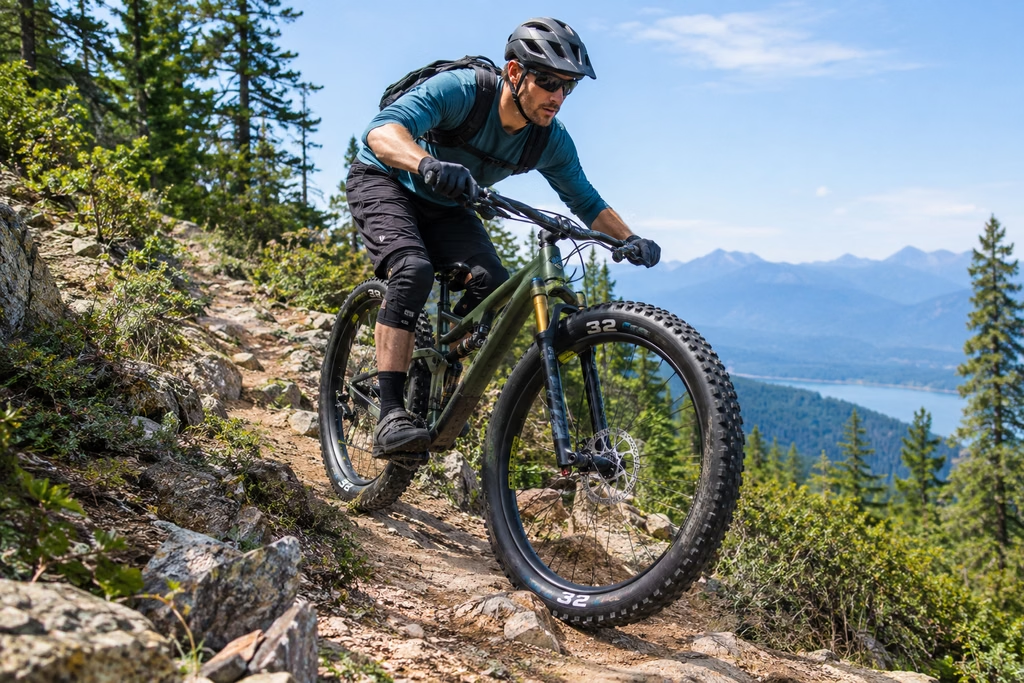
Of course, surviving the standover height is only half the battle. Once you actually manage to get rolling, you have to steer the damn thing. And that is where the 32-inch wheel transformation truly transitions from “absurd design choice” to “psychological horror.”
Remember what it felt like to whip a nimble 26-inch bike through a tight, loamy switchback? Pure poetry. You leaned, the bike tracked, and you felt like a trail maestro. Now, imagine trying to negotiate that exact same tight alpine switchback on wheels so massive they have their own gravitational pull.
Cornering on a 32er doesn’t feel like mountain biking. It feels like parallel parking an articulated semi-truck in a suburban cul-de-sac while towing a boat. Your front tire is entering the next zip code and checking out local real estate trends, while your rear wheel is still back at the apex wondering what happened.
You find yourself executing multi-point turns on singletrack. Turn handlebars left. Reverse slightly. Crank wheel right. Pray to the cycling gods. Switchbacks that used to be a fun, flowy dance now require a dedicated spotter with orange safety cones and a whistle. You aren’t flowing through the forest; you’re attempting a rigorous maritime navigation exercise through a tight forest channel. Good luck keeping your momentum when every corner requires you to calculate turning radiuses fit for a commercial freight liner.
Historical Deja Vu (The Penny Farthing Connection)
Were Victorian Gentlemen the Original Enduro Bros?
When you take a step back and look at where this is all heading, a terrifying historical realization sets in: we aren’t pioneering the future of mountain biking at all. We are just unironically cosplaying as 19th-century aristocrats.
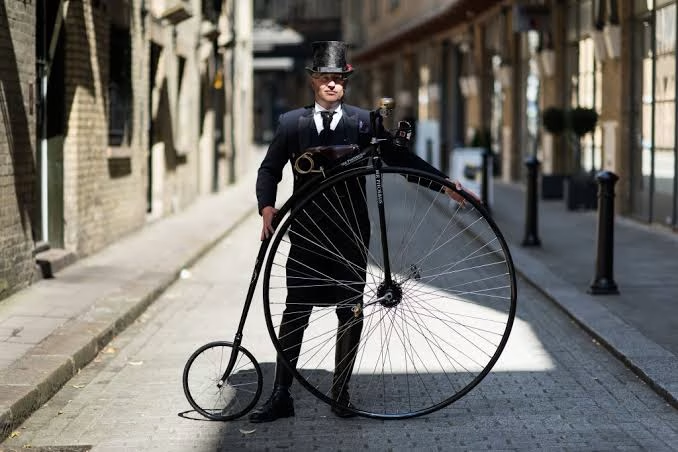
Think about it. What was the Penny Farthing? It was a bicycle featuring a comically massive front wheel designed to maximize distance per pedal stroke, a tiny trailing wheel for moral support, and a high center of gravity that guaranteed maximum face-planting velocity at the slightest hint of a pebble.
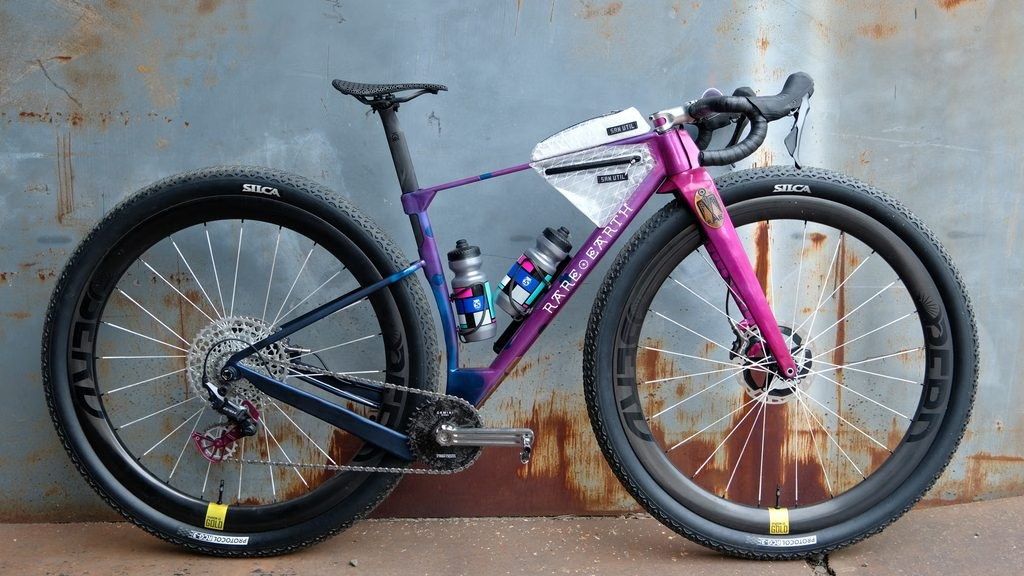
Now look at the modern 32-inch concept. Massive front wheel? Check. Massive rear wheel? Okay, fine, modern geometry gave the back wheel a glow-up, but the sentiment remains. A towering ride height that turns a minor mechanical hiccup into a potential trip to the emergency room? Double check.
Were Victorian gentlemen out there shredding local bridle paths on high-wheelers, secretly inventing the original enduro discipline? Did Lord Chesterfield drop his drop-bars into rock gardens while wearing tweed knickerbockers and a wool cap? Honestly, it explains a lot. Modern enduro bros have simply traded top hats for full-face helmets, mustache wax for beard oil, and pocket watches for Strava GPS units.
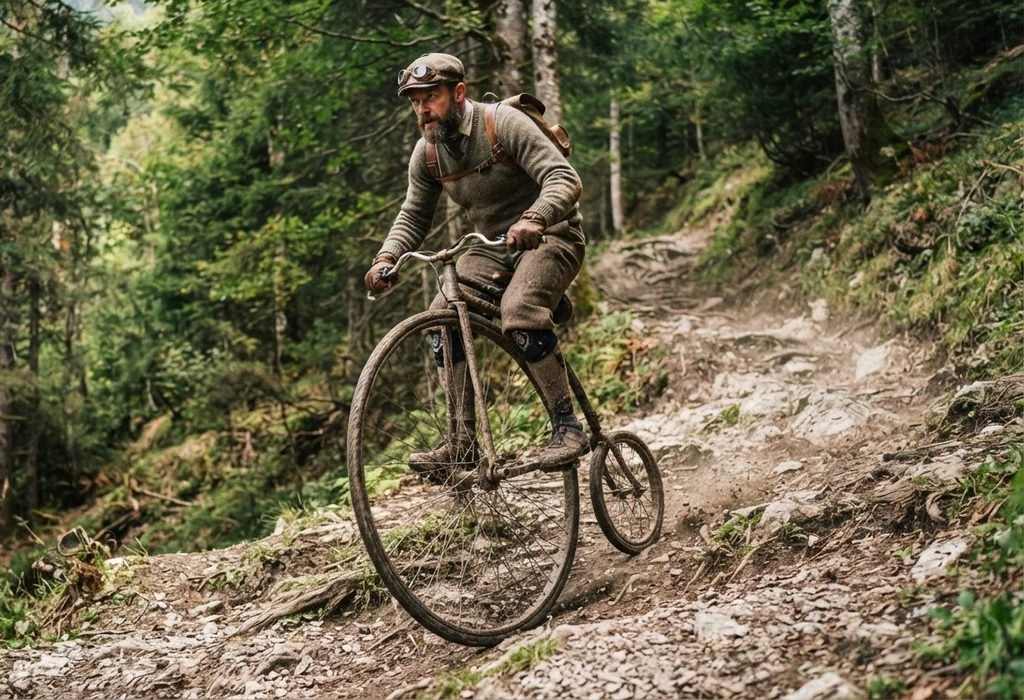
History doesn’t just repeat itself—it rolls over you on massive, oversized pneumatic tires. Next thing you know, SRAM is going to release an electronic groupset powered by a brass steam whistle.
Conclusion & Verdict
Mustache Wax Mounts and Pocket-Watch Telemetry
So, where does this leave us? As we stare down the barrel of an inevitable future where our bikes are taller than we are and our local bike shops stock stepladders right next to the floor pumps, we have to look ahead.
If the bike industry’s obsession with scaling things up continues unchecked, next year’s product launch won’t be about carbon layup schedules or micro-adjustment suspension. We are looking at a brave new world of integrated accessories. Expect to see factory-installed mustache wax mounts on the top tube, frame-integrated spittoon bottle cages, and GPS units disguised as brass pocket-watches that chime gently every time you KOM a segment.
Thank you for reading and we hope you enjoyed the article as much as we did writing it, and had a laugh! Whether you are happily sticking to your trusty 29ers or seriously considering retrofitting your ride with a stepladder just to reach the pedals, remember not to take the ever-changing cycling trends too seriously. May your tires stay inflated, your switchbacks be manageable, and your next ride keep you safely out of low Earth orbit.