
Disclaimer: This post contains affiliate links. As an Amazon Associate, Dirty Derailleur earns from qualifying purchases at no extra cost to you. Read our full disclosure here.
If you are new to cross-country (XC) mountain biking, you have likely realized that XC riding can be a test of endurance. Unlike downhill or enduro disciplines where you spend half the time standing on the pedals, cross-country riding requires hours of relentless, high-cadence seated pedaling—frequently on stiff hardtails or short-travel full-suspension bikes that transmit every trail ripple straight up your spine.
Stock saddles bundled with entry-level mountain bikes are notorious for causing inner-thigh chafing, painful soft-tissue numbness, and poor pelvis positioning that saps your pedaling efficiency. It literally feels like you’re sitting on a razor blade!
But here is the good news: you do not need to drop $200+ on ultralight carbon-railed saddles to fix the problem. By upgrading to an ergonomics-focused, budget-friendly XC saddle for under $100, you can instantly improve power transfer, eliminate trail chatter, and stay comfortable for miles.
Quick Summary: The Best Budget XC Saddles at a Glance
- Best Overall XC Saddle: WTB Silverado (Steel/Chromoly) – Elongated slim nose and flat profile allow effortless weight shifts and maximum power transfer on steep climbs. (approx $45–$55)
- Best Ultra-Budget Pick: Charge Spoon – Classic ergonomic scoop design with high-density padding that delivers exceptional comfort at a fraction of the cost. (approx$30–$35)
- Best for Power Transfer & Pressure Relief: Ergon SM Comp – Deep anatomical channel engineered specifically for forward-leaning pedaling mechanics on endurance rides. (approx$95–$100)
- Best Eco-Friendly Short-Nose: Selle Italia Model X Green Superflow – Modern short-nosed design with a full central cutout and wave profile that locks your hips in place during climbs. (approx$40–$50)
- Best Budget Women / Unisex Fit: WTB Koda (Steel) – Short, wide nose paired with a generous cutout designed to support wider sit bones without inner-thigh friction. (approx$45–$50)
Key Takeaways
- Prioritize Weight and Comfort: New cross-country riders need a balanced saddle that minimizes trail chatter without adding unnecessary grams to hardtails or short-travel bikes.
- Match Shape to Riding Style: Selecting the right profile—whether a flat saddle for active weight shifts or a curved shape for locked-in climbing—directly prevents soft-tissue numbness.
- Support Efficiency to Ride Longer: A well-fitted budget saddle reduces fatigue, preserves power transfer during long seated efforts, and keeps you comfortable for miles on the trail.
- Proper Width Beats Heavy Padding: Supporting your sit bones on a correctly sized platform prevents friction and pressure far better than thick, squishy gel pads.
- Big Comfort Doesn’t Require Big Budgets: Upgrading from a harsh stock seat to an ergonomics-focused saddle under $100 transforms ride quality without high-end carbon costs.
We will take a more in-depth look at each of these saddles a little bit later on in the post.
Why Your Saddle Choice Matters for Cross-Country Riding
Your choice of saddle shapes how every hour on singletrack feels—comfort, power, and control all start where you sit.
You spend most of your time seated while pedaling on long mountain rides. A well-fitted mountain bike saddle reduces numbness and lets you ride longer and harder.
A poorly fitted bike saddle brings discomfort and wrecks your day. We found that good designs improve power transfer and stability on steep climbs.
Whether you ride a road bike to work or push technical trails, the saddle is your primary contact point. We evaluated many mountain bike saddles to show why this component is one of the most important on your bike.
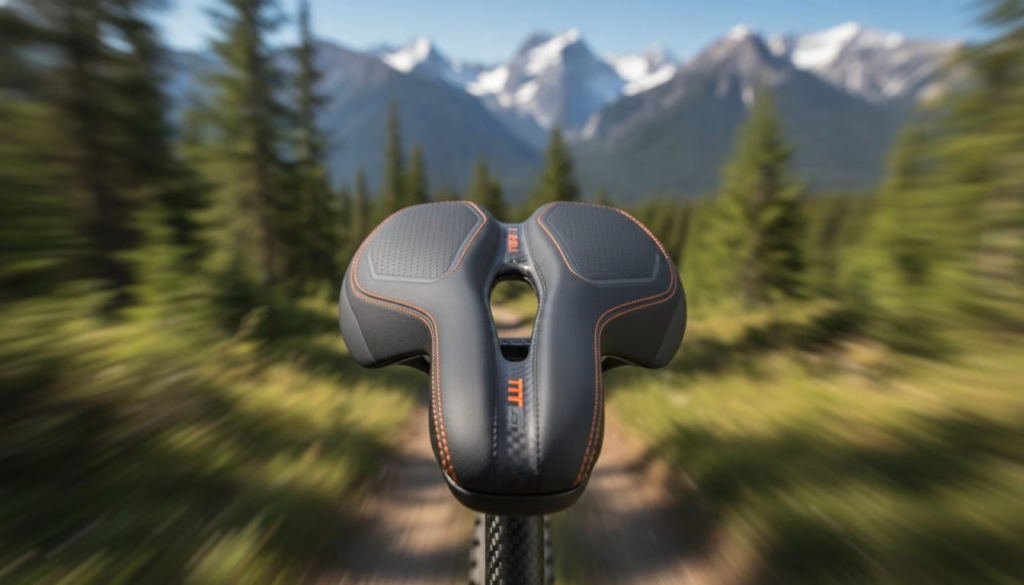
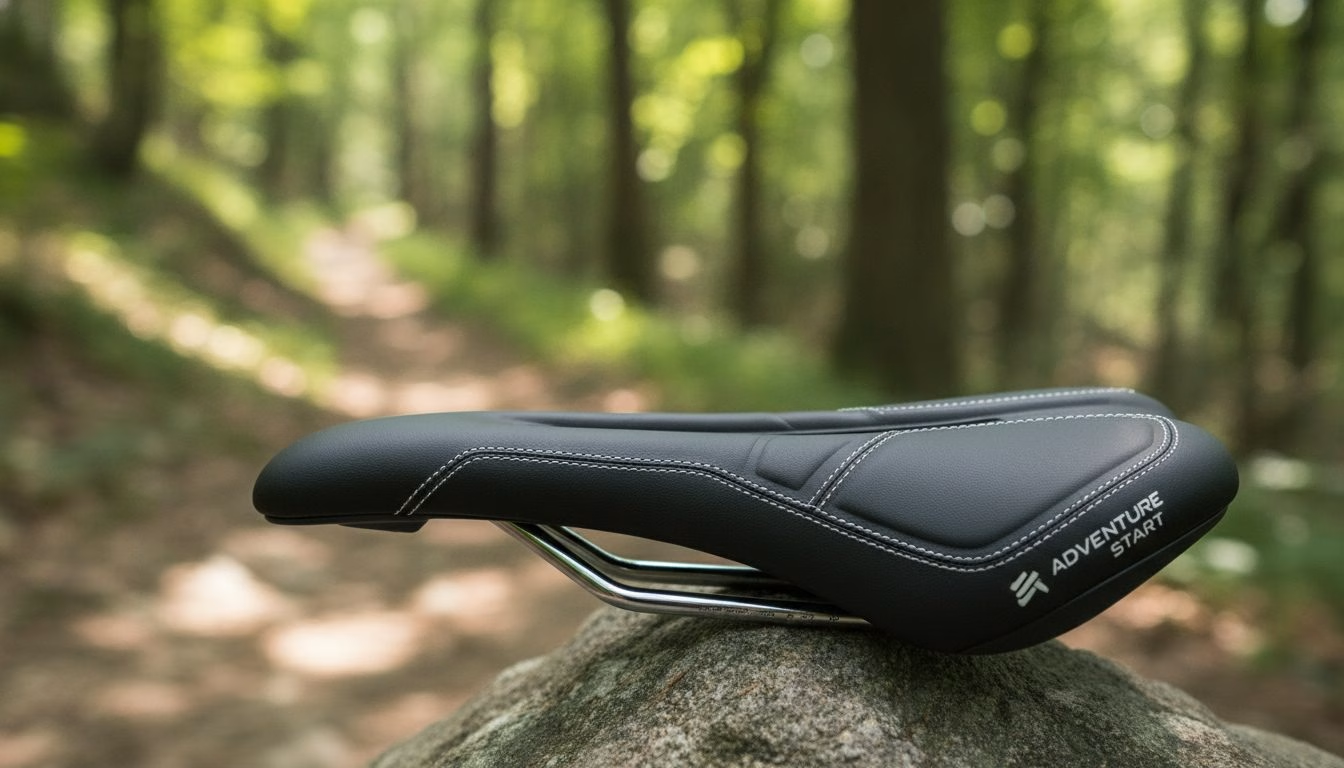
| Why it matters | What you feel | What to check |
|---|---|---|
| Fit to your anatomy | Less numbness, longer rides | Measure sit bone width |
| Shape and profile | Better pedaling efficiency | Match to riding posture |
| Materials and flex | Improved power transfer | Check rail and shell specs |
Understanding Your Anatomy and Sit Bone Width
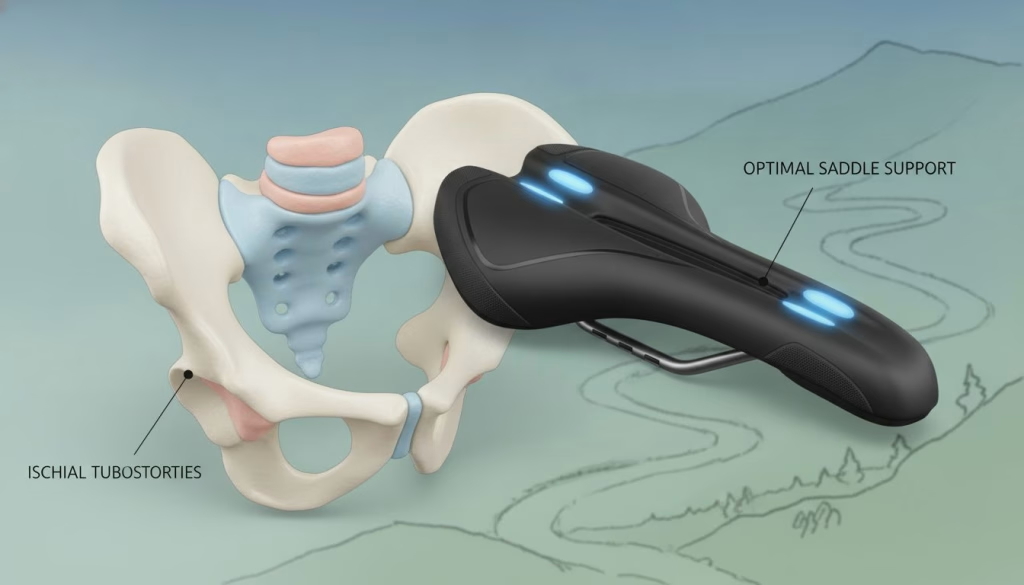
Knowing your sit-bone width is the single most useful step toward a comfortable ride. Get this right and you avoid pressure in sensitive areas during your longer rides.
Measuring Your Sit Bones
Measure while seated on a flat, firm surface with a towel or corrugated foam. Press down, then check the distance between the marks to find your sit bones.
Many shops and brands provide simple tools to help you measure accurately.
Why Width Matters
If the saddle width is wrong, your sit bones won’t carry the load. That shifts pressure to soft tissue areas and causes numbness or pain on mountain rides.
Pick a saddle that keeps your sit bones supported. Visit a local shop to have your sit bones measured and to test a few saddles on your bike.
| Saddle Width (mm) | Estimated Sit Bone Span (mm) | Recommended Use | Notes |
|---|---|---|---|
| 120 | ≤95 | Riders with narrow sit bones | Lightweight, more forward pedaling feel |
| 130 | 96–110 | Most average riders | Balanced support and comfort |
| 140–150 | 111–130+ | Wider sit bone spans, larger frames | Better pressure distribution for longer rides |
Finding the Best Budget Cross-Country MTB Saddle For Beginners
A lightweight, pedaling-focused seat can transform how you ride over rocky climbs and long flats.
Look first at weight and padding. Lighter options cut fatigue, while firm padding keeps power transfer efficient.
Shape and saddle width matter just as much. Pick a profile that lets your sit bones carry the load and lets you shift position when the trail demands it.
Durability and price should not force you to choose one over the other. Many affordable bike saddles balance a solid shell with enough padding to avoid pressure on soft tissue during longer rides.
Switching to the right seat improved our performance on both road bike and trail sessions. Spend a little time on fit and you’ll save time and pain on every ride.
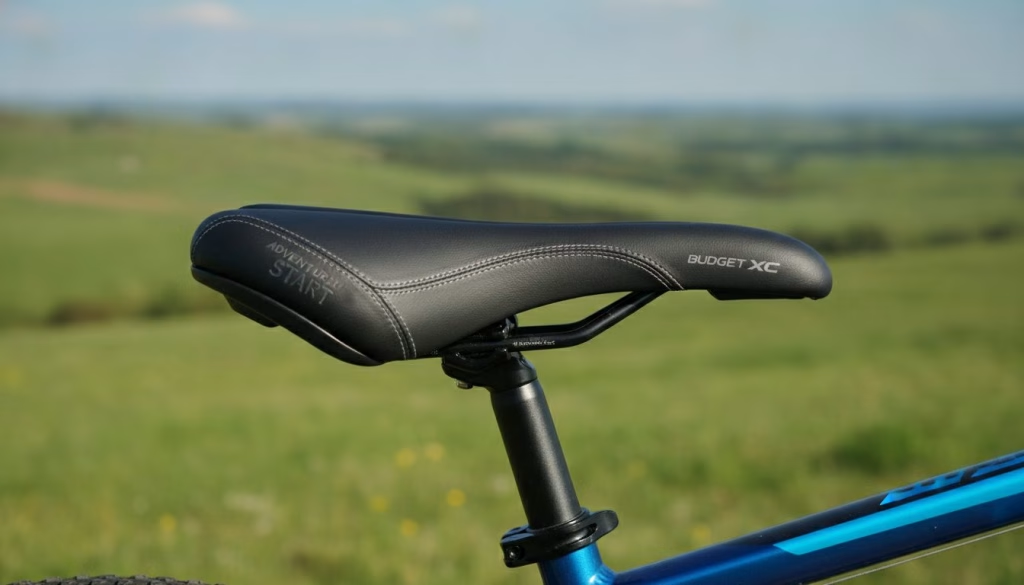
| Attribute | What to check | Why it matters |
|---|---|---|
| Weight | 270 – 320g for XC | Reduces fatigue on climbs |
| Padding | Firm, low-volume | Better pedaling and less pressure |
| Rails | Chromoly or alloy | Durable and affordable option |
| Width & shape | Match your sit bones | Improves comfort and fit |
Key Features to Look for in an Affordable XC Seat
A well-designed riding platform helps you shift, pedal, and stay comfortable when the trail gets rough. Focus on features that balance comfort, weight, and durability so your ride feels steady without extra bulk.
Shape and Profile
The shape of a mountain bike saddle, especially the nose and rear profile, controls how easily you move on the bike. A slightly cradled tail, like the WTB Volt, gives a stable rear platform for climbs and seated efforts.
Look for a shell that provides measured flex to absorb trail vibration while supporting your sit bones. That support helps spread pressure away from sensitive areas and keeps your hips aligned during long efforts.
Padding density should be balanced. Too much padding adds weight and reduces pedaling feedback. Too little padding can create pressure points and reduce comfort on multi-hour rides.
| Feature | What to check | Why it matters |
|---|---|---|
| Shape & nose profile | Low-volume nose; raised tail | Allows easy movement and stable seated pedaling |
| Shell design | Controlled flex; durable material | Absorbs vibration and resists trail wear |
| Padding & width | Balanced density; match sit bones | Reduces pressure and improves performance |
| Price vs. build | Durable shell and rails at fair cost | Long-term value and less frequent replacement |
The Role of Padding and Shell Flex in Long-Distance Comfort
The interaction of padding and shell flex is what keeps you riding comfortably over extended climbs and descents.
Padding soaks up repeated hits and spreads pressure across the rear of the seat. A thicker gel or layered foam gives a couch-like feel that keeps soreness away on long rides.
Shell flex controls how the seat moves with your hips. A flex-tuned shell absorbs trail vibration and reduces shock to soft tissue.
Many riders avoid numbness by choosing a saddle with a central channel. Nose shape also matters: a low-volume nose lets you shift forward easily while a slightly raised rear supports seated climbs.
| Feature | What it does | Why it matters |
|---|---|---|
| Padding type | Gel or layered foam | Distributes pressure; reduces numbness |
| Shell flex | Controlled flex-tuned design | Absorbs vibration; keeps comfort over time |
| Central channel | Pressure relief in sensitive area | Prevents numbness during long rides |
Why Weight Matters for XC Performance
Budget XC Saddle Weight Breakdown
- Lightweight / Race-Focused Budget Range: 270g – 290g
- Features: Chromoly rails, flat profiles, firm high-density foam padding, minimal scuff guards.
- Examples: Charge Spoon (~285g), WTB Silverado Chromoly (~270g–295g).
- Standard / Ergonomic Budget Range: 295g – 320g
- Features: Steel rails, wider sit-bone platforms, deep anatomical cutouts, orthopedic padding.
- Examples: Ergon SM Comp (~280g), WTB Koda Steel (~315g), Selle Italia Model X Superflow (~315g).
- Heavy / Stock Saddle Territory (To Avoid): 350g+
- Features: Heavy stamped steel rails, thick gel inserts, non-breathable plastic covers typical of unbranded factory seats.
Cutting grams at the contact point affects more than just your scale weight. A lighter seat helps you accelerate out of turns and climb with less fatigue.
Of the 5 saddles we review here, the Charge Spoon is the lightest overall, weighing in at 285g, even though the WTB Silverado starts at 270g, it can go up to 295g, depending on the model which also increases the price beyond the scope of this article! That low number translates to quicker pedaling on long, steep climbs.
Still, you should balance low weight with enough support to preserve comfort on long rides. Ultra-light options can trade padding and shell flex for grams saved. That can increase pressure on soft tissue if the shape doesn’t match your anatomy.
In our testing, high-performance seats used carbon rails or tuned shells to keep weight down without losing structural strength. The result is better handling and a more responsive bike when the trail gets technical.
If you want faster climbs and sharper handling, go for a lighter seat. Just confirm the shape supports your sit bones so you don’t give up comfort for speed.
Evaluating Rail Materials for Durability and Cost
Rail choice often changes how a seat handles hits and how long it lasts on rough trails.
Chromoly steel rails give you a strong, forgiving option without a high price. They resist bending and suit aggressive mountain riding. You get solid durability and a lower price point compared with lighter metals.
Titanium rails cut weight while keeping high strength. Models like the WTB Volt Fusion Form use titanium to balance low weight and lasting performance. If you chase lighter setups, titanium helps reduce bike mass without sacrificing ride quality.
When you compare materials, think about how rails affect comfort, pressure spread, and long-term wear. Rails change flex and the way padding works under load, so match materials to your riding style and the width and shape of your seat.
| Material | Typical Weight | Durability | Price Impact |
|---|---|---|---|
| Chromoly steel | Moderate | High; tough on trails | Low |
| Alloy steel | Heavier | Good; cost-effective | Very low |
| Titanium | Low | High; corrosion-resistant | Higher |
Now! We will dig deeper into the Detailed Reviews for each saddle to help you choose the best budget saddle for you…
1. WTB Silverado (Steel/Chromoly) – Best Overall Budget XC Saddle
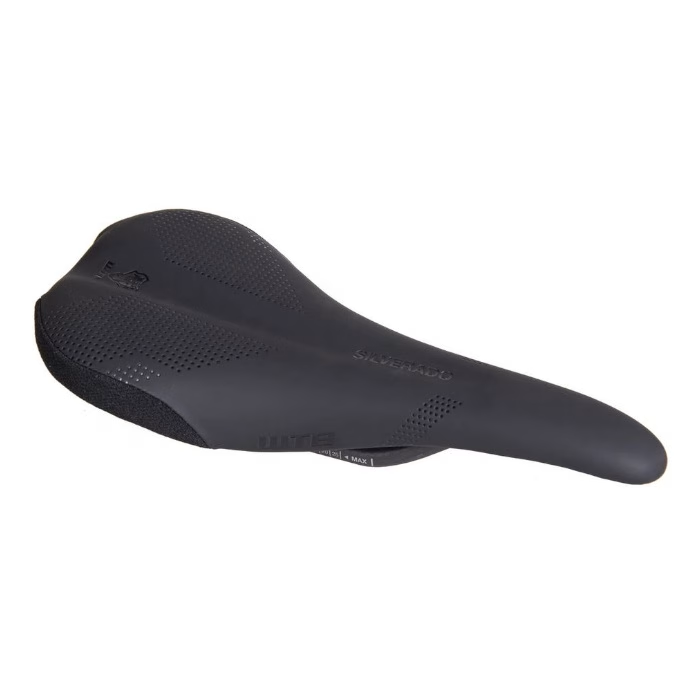
The WTB Silverado features a slim, flat profile with an extended nose that provides optimal power transfer and easy weight distribution on steep climbs.
The WTB Silverado is a legendary icon in cross-country and trail riding. Known for its sleek silhouette and racing heritage, this saddle provides a race-ready feel without forcing you into an uncomfortable, rock-hard setup.
Why It’s Great for XC Beginners
Cross-country riding demands constant shifts in body position. On steep, punchy climbs, you need to slide forward onto the saddle nose to weight the front wheel and keep it glued to the trail; on flats, you need a flat platform to sit back and crank out power. The Silverado’s long, tapered nose and flat profile give you the freedom to move seamlessly along the entire length of the seat.
Instead of relying on heavy gel padding that creates soft-tissue friction, the Silverado uses a Flex-Tuned nylon shell that absorbs trail chatter from stiff hardtails. It features WTB’s subtle Love Channel—a central depression that relieves pressure on sensitive nerves without sacrificing the structural support needed for high-cadence pedaling.
- Pros:
- Exceptional mobility: The long, slim shape lets you slide forward or back easily during cadence changes.
- Optimized power transfer: Flat top profile prevents pelvis rotation locking, maximizing leg extension output.
- Durable & lightweight: Chromoly steel rail options keep weight as low as ~270g while handling hard trail impacts.
- Cons:
- Firm feel: Minimalist padding requires a short break-in period if you aren’t wearing padded chamois shorts.
- No full cutout: Riders who require a complete center hole cutout may prefer a short-nose design.
2. Charge Spoon – Best Ultra-Budget Value ($40 – $50)
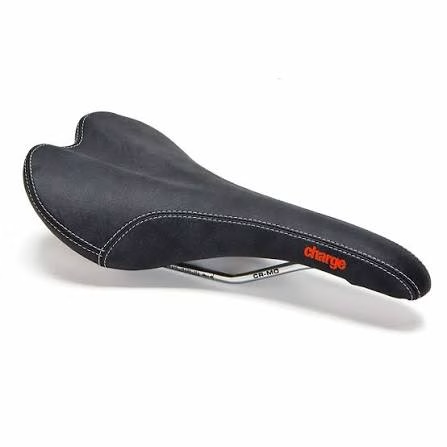
The Charge Spoon has earned a cult-like status across mountain biking, gravel, and commuting communities.
It consistently proves that you do not need to spend big money to get lightweight, supportive, and ergonomic seating performance.
Why It’s Great for XC Beginners
The Charge Spoon is built around a supportive “scooped” profile featuring a subtle rear rise and a dropped, padded nose. This shape acts as a cradle for your pelvis, preventing you from sliding backward when putting power into the pedals on steep cross-country ascents.
Despite its low price point, the Spoon comes standard with durable Chromoly steel rails, keeping the total weight under 290g—a benchmark that rivals saddles costing twice as much. Its central pressure-relief channel runs down the midsection to promote soft-tissue airflow and blood circulation during high-cadence pedaling. Additionally, the flexible nylon hull underneath dampens trail chatter, making stiff hardtail mountain bikes noticeably more forgiving on rough dirt singletrack.
- Pros:
- Unbeatable value: Delivers lightweight performance and ergonomics at an accessible entry price.
- Chromoly rails: Lighter and more dampening than the standard stamped-steel rails found on most budget saddles.
- Supportive scoop shape: Keeps your posture locked in for efficient pedaling on long trail rides.
- Cons:
- Single width option: Only available in 140mm, which may feel narrow for riders with wider sit bones.
- Synthetic cover wear: Detailed contrast stitching can show cosmetic wear after heavy mud and friction exposure.
3. Ergon SM Comp – Best Ergonomic Relief for Endurance XC
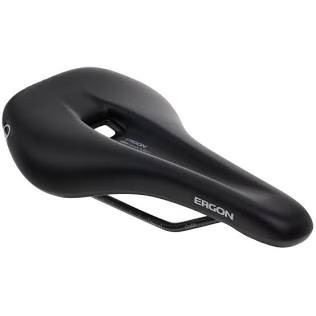
If you are willing to stretch your budget slightly to eliminate saddle pain entirely, the Ergon SM Comp is arguably the most technologically advanced ergonomic saddle you can buy. While it sits at the premium edge of entry-level pricing, it upgrades the base SM Sport model with lighter Chromoly rails and advanced OrthoCell® padding inlays, dropping weight down to an impressive ~280g while significantly increasing vibration damping.
Why It’s Great for XC Beginners
Cross-country riding forces you into a lower, forward-tilted pelvic angle to reach the handlebars and put down power. On standard stock saddles, this posture shifts your body weight directly onto delicate perineal nerves and blood vessels, leading to soft-tissue numbness within 30 minutes of hitting the singletrack.
The SM Comp solves this with a gender-specific anatomical relief channel engineered specifically for aggressive, forward-leaning pedaling mechanics. Rather than relying on squishy gel that collapses and creates chafing friction, Ergon integrates OrthoCell® inlays directly under the sit-bone area. These high-tech inserts provide higher rebound forces and pressure distribution than standard gel or foam, absorbing high-frequency trail chatter from stiff hardtails. Combined with friction-reducing side flanks, the SM Comp allows your legs to spin at high cadences without inner-thigh rubbing.
- Pros:
- Advanced OrthoCell® tech: Premium pad inlays deliver superior pressure distribution and vibration damping over standard foam.
- Anatomical size options: Available in two distinct width sizes (S/M and M/L) to match your exact sit-bone measurements.
- Lightweight Chromoly rails: Trims weight down to ~280g (S/M), making it notably lighter than standard steel-railed budget saddles.
- Low-friction flanks: Tapered side edges reduce inner-thigh chafing during high-cadence spinning.
- Cons:
- Firm support profile: The supportive orthopedic foam prioritizes long-distance structural alignment over pillowy initial softness.
- Price tag: Sits at the absolute upper ceiling of entry-level budgets (~$95-$100).
4. Selle Italia Model X Green Superflow – Best Eco-Friendly Short-Nose Design
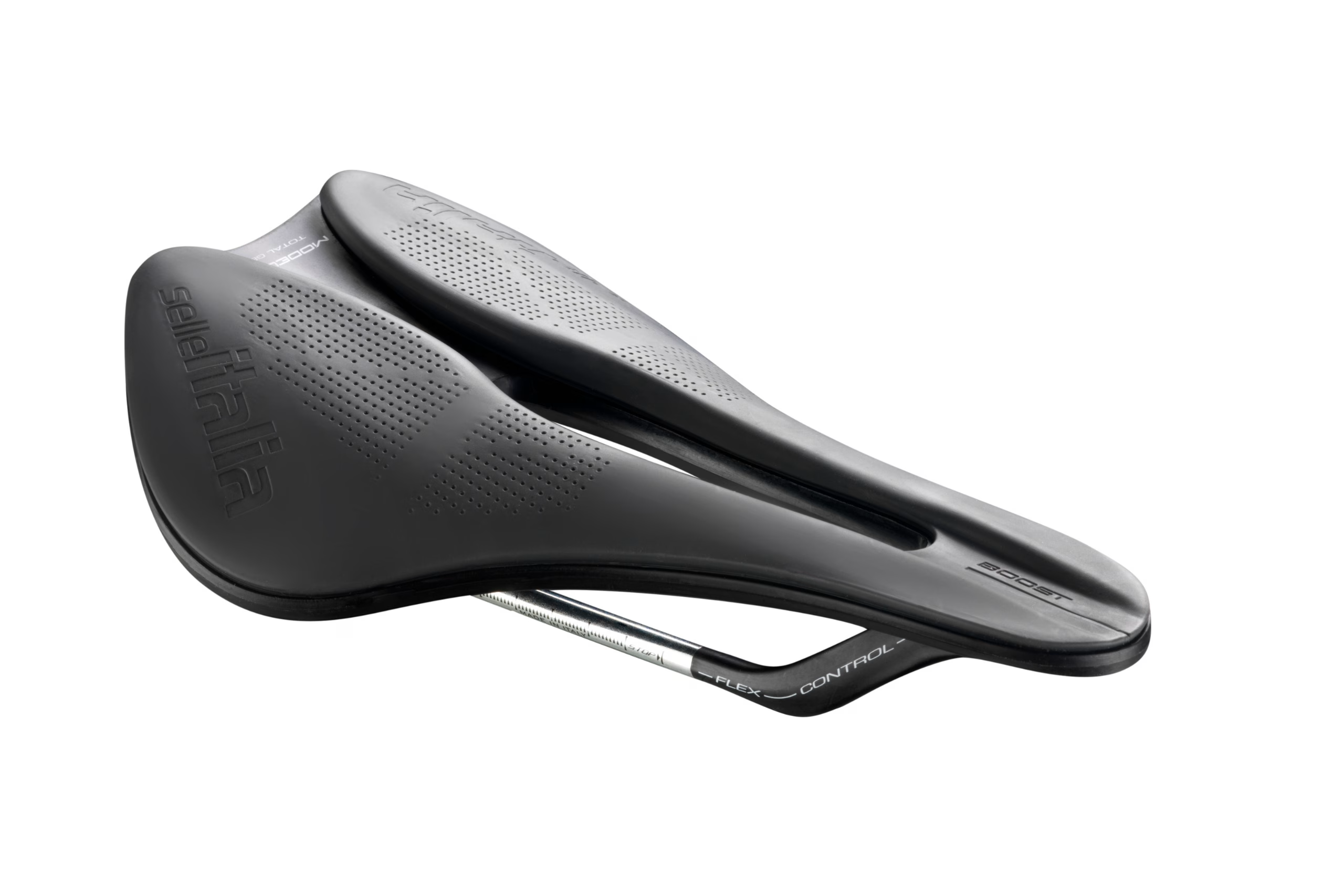
Selle Italia brought high-end Italian saddle tech down to an entry-level price point with the Model X Green Superflow. Built using a solvent-free, eco-friendly automated manufacturing process in Italy, this saddle features a modern short-nosed profile and a massive central cutout designed to keep pressure entirely off your soft tissues during aggressive cross-country pedaling.
Why It’s Great for XC Beginners
When leaning forward over the handlebars during steep, seated XC climbs, long-nosed traditional saddles can place intense pressure on sensitive soft tissue. The Model X solves this by pairing a shortened nose with Selle Italia’s wide Superflow cutout, directing all your weight onto your sit bones instead. The hull features built-in flex zones that dampen vibration on stiff hardtails, while the waved rear shape gives your hips a firm backstop to push against when putting down maximum power.
- Pros:
- Massive central cutout provides unmatched soft-tissue pressure relief during aggressive forward-leaning pedaling.
- Modern short-nosed profile eliminates clothing snag points and reduces leg friction.
- Waved shape provides excellent hip support for sustained climbing efforts.
- Cons:
- The grippy gel top material makes sliding back and forth slightly stickier compared to slick synthetic covers.
- Only available in one standard width (145mm).
5. WTB Koda (Steel Rails) – Best Budget Fit for Female Riders & Wider Sit Bones
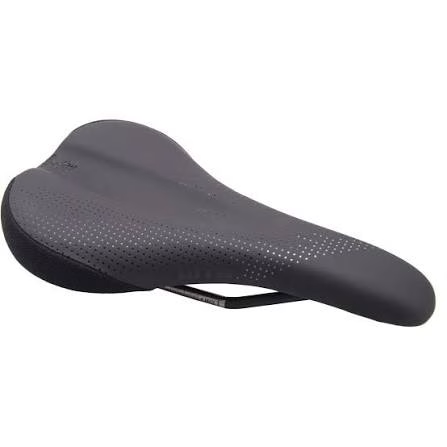
Originally refined through two years of female-focused trail testing, the WTB Koda proved to be so comfortable that WTB dropped the “women-specific” tag in favor of a universal, female-focused unisex design.
It combines a generous width platform with modern ergonomics to solve sitting-bone discomfort once and for all.
Why It’s Great for XC Beginners
Many beginner riders—particularly female cyclists or riders with broader hip spans—suffer from chronic sit-bone pain because standard budget saddles max out at a narrow 135mm–140mm. The Koda starts at a generous 145mm width and goes up to 150mm, giving your ischial tuberosities plenty of supportive real estate.
Cross-country climbing requires shifting forward on the seat during steep pitches. The Koda accommodates this with a broad, padded nose that provides a stable perch without digging into soft tissue. Its shortened 255mm total length reduces clothing hang-ups when transitioning out of the saddle on technical trail descents, while a deep Love Channel center depression keeps blood flowing freely during long, seated efforts.
- Pros:
- Broader platform: 145mm and 150mm widths prevent sit bones from overhanging and pressing into hard edges.
- Supportive nose: Wide, flat nose provides a comfortable platform when weighting the front wheel on steep climbs.
- Shortened profile: 255mm length prevents baggy riding shorts from snagging.
- Cons:
- Not for narrow hips: The 145mm minimum width may feel too wide for riders with narrow sit-bone spacing.
- Slightly heavier: Steel rails push the total weight to ~315g.
How to Properly Position Your New Saddle
A few millimeters of fore-aft change can turn an annoying hotspot into a non-issue.
Start by setting height so your leg has a slight bend at the bottom of the pedal stroke on your bike. That ensures efficient power transfer and reduces knee strain.
Next, check fore-aft position. Slide the seat forward or back until your knee sits roughly above the pedal spindle when cranks are level. Small moves here change how your sit bones carry load.
Tilt the nose to relieve pressure on sensitive areas. A level saddle is a good baseline, then tip the nose up or down a degree or two until pressure eases while you are riding.
Allow time to test changes on short rides. Track how long it takes before discomfort appears and tweak the position. Remember, even an expensive bike saddle will feel wrong if it is not set up to your shape and riding style.
| Adjustment | What to check | Why it matters |
|---|---|---|
| Height | Slight knee bend at bottom stroke | Power transfer and knee health |
| Fore-aft | Knee over pedal spindle with cranks level | Balanced sit bone support |
| Tilt (nose) | Level then slight adjustments | Reduces pressure and hotspots |
Avoiding Numbness and Pressure Points on the Trail
Numbness on the trail usually starts where pressure concentrates under your sit bones. Pick a saddle that moves pressure to the rear and away from soft tissue. That lowers the risk of hotspots during long rides.
Identifying Pressure Points
Ride for short blocks and note where you feel tingling, soreness, or any pain. These are your pressure points.
Pay attention to the rear and the nose separately. Where you feel pressure tells you whether to change width, padding, or shape.
The Role of the Nose
The nose should let you shift forward without rubbing. A low-volume nose helps you move on technical sections.
Many modern mountain bike saddles have a central relief channel. The Ergon SM Sport features a deep channel that reduces pressure and prevents numbness on endurance rides.
Adjusting Tilt
Start level, then try small tilt changes. Even one or two degrees can ease pressure on sensitive areas.
Test angles on short outings and track whether numbness fades. Combine tilt tweaks with tiny fore-aft moves until you find the best balance of comfort and performance.
| Issue | What to change | Why it helps |
|---|---|---|
| Numbness under soft tissue | Try a saddle with a relief channel | Reduces pressure and maintains blood flow |
| Hot spot near nose | Lower nose volume or adjust tilt | Lets you move forward without rubbing |
| Pressure at rear | Increase width or firmer padding at rear | Supports sit bones and spreads load |
Comparing Synthetic Covers Versus Premium Materials
The outer material of a bike seat controls grip, water resistance, and wear more than padding alone.
Synthetic microfiber covers are common on durable mountain bike saddles because they resist abrasion and are easy to clean. They held grip in wet, muddy conditions and kept shorts from sliding. That reduced unwanted friction and helped avoid pressure spots on longer rides.
Premium options, like 3D-printed padding or leather blends, often improved comfort and contouring. Those materials added cost and sometimes a bit more weight, but they delivered targeted support where you needed it most.
How the cover bonds to the shell affects longevity. A well-bonded cover resists peeling and keeps the internal padding stable. Consider how the material works with your shorts and how the design spreads load to minimize hotspots.
| Cover Type | Pros | Cons |
|---|---|---|
| Synthetic microfiber | Durable, grippy, easy care | Less premium feel; lower cost |
| 3D-printed / premium | Targeted comfort, refined fit | Higher price; slightly more weight |
| Leather / blended | Classic look; molds over time | Needs care; can be slippery when wet |
The Importance of an Anatomical Relief Channel
A relief channel can change how pressure hits your perineum and stop numbness on long endurance rides. When the channel is placed well, your sit bones carry more load and soft tissue gets less stress.
The best channels let the shell flex slightly so the seat moves with your hips. That flex adds comfort when you sit for hours and works with the padding to keep you stable.
Some models, like the Specialized Bridge Comp, use a filled channel edge to keep mud and spray out while still reducing pressure. That design keeps function in wet, messy conditions.
Look for a saddle with a clean channel shape and supportive padding around it. A well-engineered channel is a small design choice that protects your comfort and long-term health on the bike.
| Feature | What it does | Why it matters |
|---|---|---|
| Channel placement | Redirects pressure from perineum | Prevents numbness and maintains blood flow |
| Shell flex | Allows small movement with hips | Increases comfort on long rides |
| Padding around channel | Supports sit bones without crushing soft tissue | Keeps you stable and reduces hotspots |
Tips for Testing Your Saddle During Long Rides
Short rides hide problems; long rides reveal pressure points and fit issues. Take your new bike saddle on a multi-hour trip so padding, width, and shape can prove themselves under real riding loads.
Test on mixed terrain — climb, descend, and ride some road sections — to see how the seat performs in different positions.
Pay attention to pressure and hotspots. If tingling or soreness appears, note where it starts and when. Those signals tell you whether to change width, tilt, or fore-aft position.
Keep a log of settings and time ridden. Many riders find seats feel better after a few rides as materials break in. Track changes to isolate what improves comfort and what doesn’t.
| Test | What to watch | Why it matters |
|---|---|---|
| Long climb | Rear pressure, hip comfort | Shows if width and padding support sit bones |
| Technical descent | Nose rubbing, ability to shift | Reveals nose shape and grip on trail |
| Mixed loop | Overall comfort over time | Confirms if the seat is right for road and trail use |
When to Consider Upgrading Your Setup
If you catch yourself constantly shifting to chase relief, that’s a clear sign your setup needs a change/ upgrade.
You should consider upgrading your mountain bike saddle when persistent discomfort or numbness remains after adjustments. Small tilt or fore-aft moves help sometimes, but not always.
As your skills and ride lengths increase, your needs change. Longer days call for a seat with better padding or an improved shell design to protect soft tissue and support sit bones.
If the cover is torn, foam is sagging, or rails creak, those are practical wear signs that justify a replacement. Price matters, but a thoughtful swap often returns more comfort and better performance than other upgrades.
| Trigger | What to look for | What to do |
|---|---|---|
| Persistent numbness | Doesn’t improve after fit tweaks | Test a relief-channel or wider model |
| Longer rides | New distance and load on hips | Choose improved padding or shell flex |
| Visible wear | Torn cover or compressed padding | Replace to restore comfort and support |
Don’t wait until pain forces you off the trail. A timely upgrade can keep you riding longer, with better comfort and control.
Common Mistakes Beginners Make When Buying Saddles
Choosing a seat without matching it to your body often causes numbness and hotspots. Many riders buy by looks and miss the right width for their sit bones. That leads to pressure and early pain on a long ride.
Assuming softer padding equals comfort is another error. Too much cushion can crush under load and reduce support. Firm, well-shaped padding often improves performance and relieves pressure over time.
Neglecting tilt and fore-aft setup also creates issues. Small angle changes ease pressure and stop numbness. Ignore nose shape and you’ll struggle to move on technical trail sections.
Finally, don’t equate price with fit. Expensive options can feel wrong, while many affordable bike saddles match your shape better. Comfort is personal; test options and give a seat time before judging.
| Common Mistake | Why it hurts | Quick fix |
|---|---|---|
| Buying by looks | Wrong width for sit bones | Measure sit bones; try widths |
| Choosing very soft padding | Loss of support; more pressure | Pick firmer padding with correct shape |
| Ignoring tilt/position | Numbness and hotspots | Adjust tilt & fore-aft in small steps |
Maintaining Your Saddle for Longevity
Treat your bike saddle like any other part of your bike: clean it, check it, and it will last. A few minutes after rides keeps the cover and padding in good shape.
Wipe down the seat with mild soap and water after muddy rides. That prevents dirt from breaking down the materials over time and keeps grip consistent.
Periodically inspect and torque the rail bolts to the manufacturer’s specs. If your seat uses titanium rails, avoid over-tightening the clamp to prevent damage.
Watch the cover for tearing or wear. Catching small rips early protects the foam and padding underneath and saves you a replacement later.
Regular maintenance means your bike stays reliable while you focus on riding. Small habits pay off in comfort and in the time you get from your seat.
| Action | How often | Why it matters |
|---|---|---|
| Clean cover with mild soap | After muddy rides / weekly | Prevents material breakdown; maintains comfort |
| Check rail bolts & clamp | Monthly | Prevents movement; protects rails (esp. titanium) |
| Inspect padding and cover | Every few months | Catch wear early; avoid padding damage |
Conclusion
Small, measured changes to your contact point can remove pain and boost enjoyment on trails. Pick a mountain bike saddle that matches your sit-bone width, then test it on real rides to judge fit and comfort.
Try a few bike saddles on mixed terrain and track where you feel pressure. Prioritize durable materials and correct tilt so you avoid numbness and hotspots while you ride.
When your setup works with your body, your bike feels more responsive and you ride longer with less fuss. Use these sections as a checklist, test patiently, and you’ll find the best mountain option that keeps you riding strong.