
Disclaimer: This post contains affiliate links. As an Amazon Associate, Dirty Derailleur earns from qualifying purchases at no extra cost to you. Read our full disclosure here.
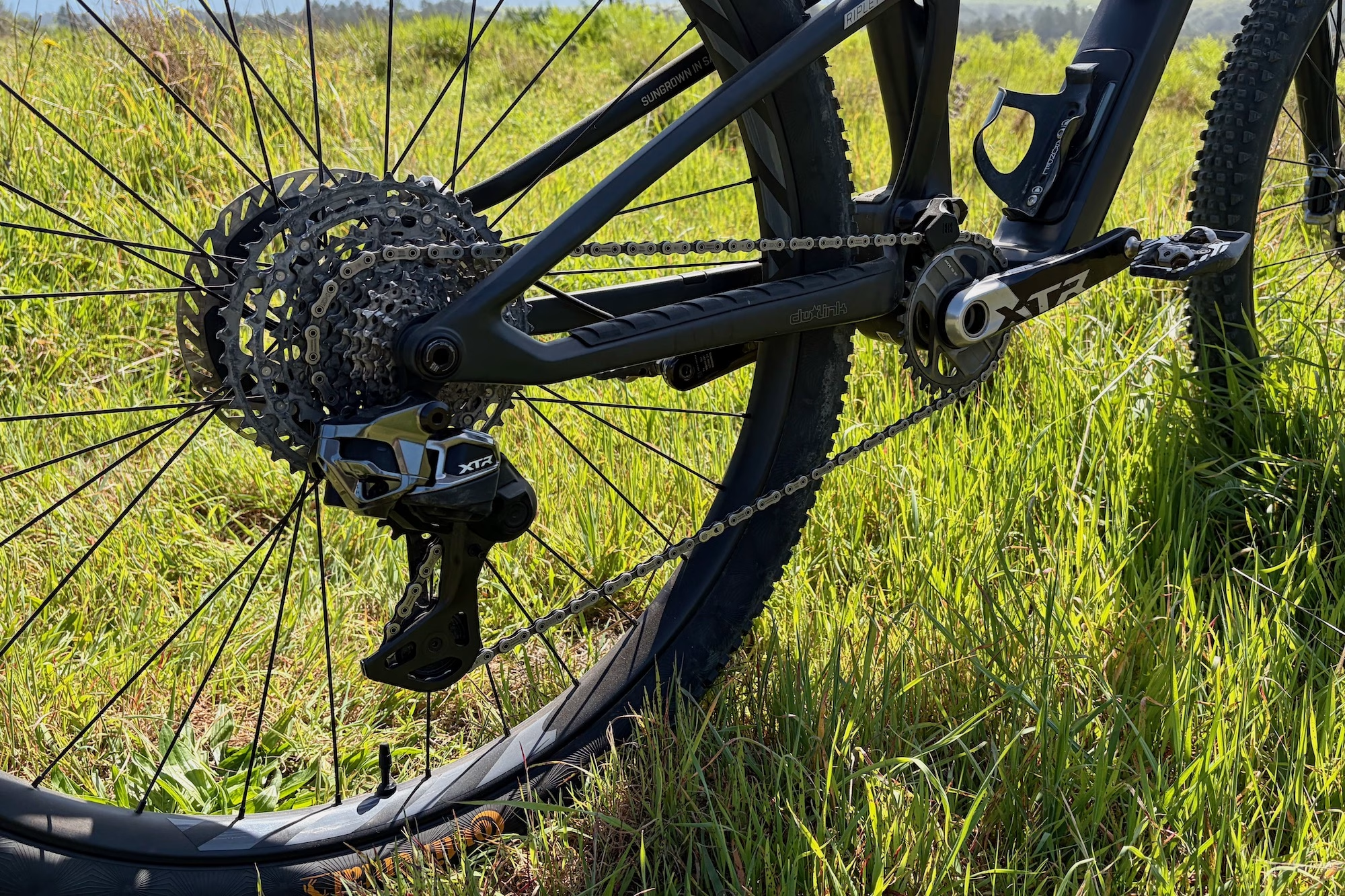
Mountain biking technology evolves at a breakneck pace, but few innovations have sparked as much passionate debate as the transition from traditional stainless steel cables to microprocessor-driven, motor-actuated derailleurs. What started as an experimental luxury reserved exclusively for professional World Cup racers has rapidly trickled down to mid-tier trail bikes. Systems like SRAM’s Eagle AXS ecosystem and Transmission (T-Type) platform, alongside Shimano’s wireless and semi-wireless Di2 offerings, are no longer fringe novelties—they are defining the modern mountain biking experience.
Yet, despite their growing popularity, many riders remain skeptical. Can a tiny battery and servo motor handle the punishing conditions of rock gardens, mud, and heavy impacts better than a simple, time-tested mechanical cable? More importantly, is swapping out your cable setup worth a price tag that can easily stretch into four figures?
In this comprehensive guide, we unpack the mechanical physics, real-world durability, ergonomics, maintenance realities, and overall cost-to-benefit ratio of wireless versus cable-actuated shifting to help you decide if it is time to cut the cord.
Before diving into the full mechanical breakdown, here is a quick look at how the market’s leading wireless systems—SRAM Eagle AXS and Shimano Di2 Deore XT—compare head-to-head. Whether you prioritize total wireless modularity, maximum shift speed under load, or smart eMTB integration, this quick snapshot highlights the core features, battery setups, and standout technologies of each system at a glance.
Quick Summary: SRAM Eagle AXS & Shimano Di2 Deore XT Wireless Drivetrains at a Glance
- Architecture & Connectivity: SRAM Eagle AXS runs on a 100% wireless design with modular, clip-on derailleur batteries that can be swapped in seconds. Shimano Di2 utilizes wireless cockpit pods communicating directly with the derailleur, keeping installation simple and cable-free.
- Shifting Under Full Load: SRAM T-Type Transmission utilizes synchronized shift-mapping that pauses slightly until cassette ramps align, ensuring smooth shifts even under max pedal watts. Shimano HYPERGLIDE+ technology paired with Di2 motors delivers instantaneous, crisp gear changes without easing up on the pedals.
- Smart Ecosystem & Customization: SRAM AXS offers deep button remapping, multi-shift speed settings, and battery tracking through the SRAM AXS App. Shimano Di2 leverages the E-TUBE PROJECT App for fine-tuning and integrates seamlessly with eMTB systems for automated shifting features.
- Impact Protection & Trail Resilience: SRAM AXS features an automatic overload clutch that momentarily disengages the motor upon rock impacts to prevent hanger or derailleur breakage. Shimano Di2 relies on a low-profile Shadow RD+ design and a rugged aluminum cage to deflect trail debris.
We will take a more in-depth look at both of these drivetrain systems a little bit later on in the post.
How Mechanical and Wireless Drivetrains Work
To understand why electronic shifting behaves so differently on the trail, you first have to understand the physical mechanics driving each system.
The Physics of Cable Shifting
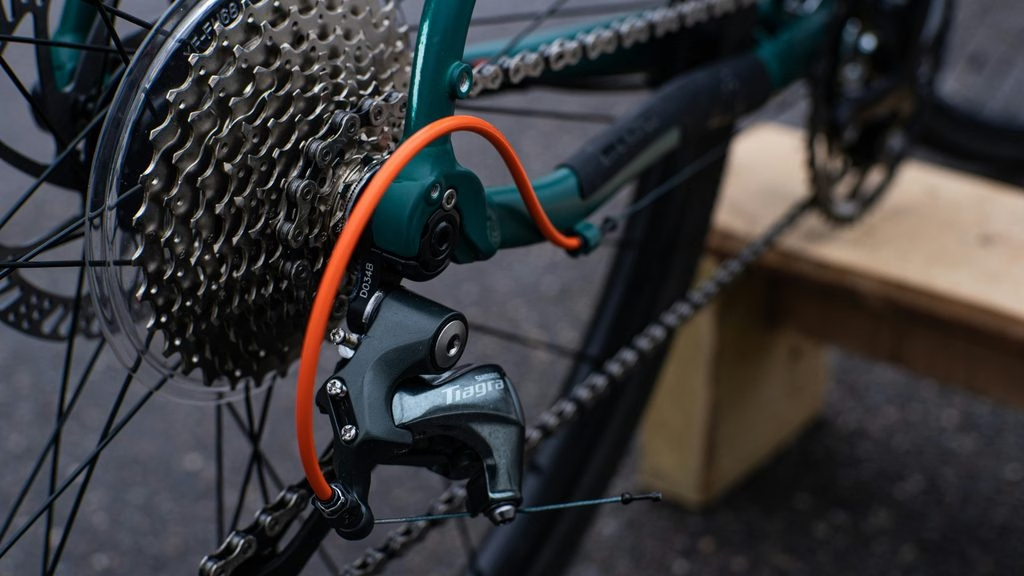
For decades, index shifting has relied on a system of mechanical lever ratios, cable pull, and spring tension:
- Lever Actuation: When you push a mechanical shifter paddle, you compress an internal ratchet mechanism that pulls a flexible, braided stainless-steel cable.
- Tension Transmission: That cable glides through a length of outer housing (lined with Teflon or similar slick polymers) strung through or along your bike frame.
- Spring Counter-Tension: The cable attaches to the derailleur’s parallelogram. Pulling the cable pulls the derailleur inward toward larger cassette cogs; releasing tension allows an internal spring to push the derailleur back outward toward smaller cogs.
This system is clever, light, and effective. However, it relies heavily on uninterrupted linear tension. Any variable that introduces friction or alters effective cable length—such as housing compression, dirt ingress, bent derailleur hangers, or subtle cable stretch—directly degrades shifting performance.
The Physics of Wireless Electronic Shifting
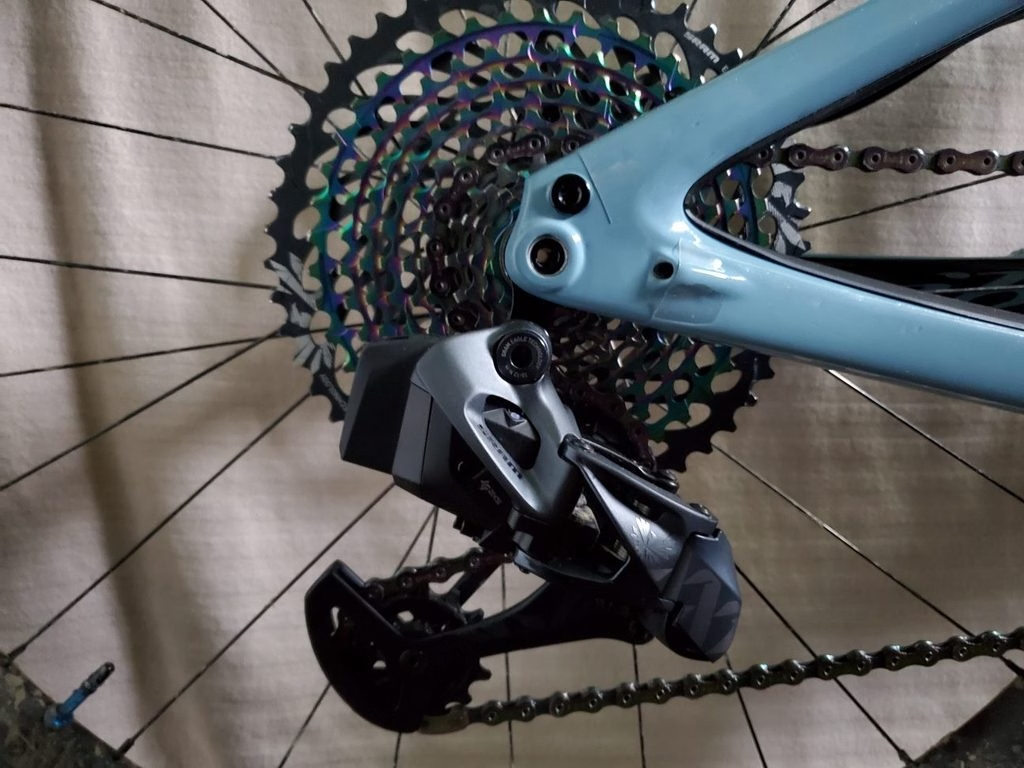
Wireless electronic drivetrains replace high-tension cables and return springs with digital signals and motorized actuators:
- Encrypted Wireless Signal: When you press a button or paddle on a wireless shifter pod, a tiny coin-cell battery sends a secure, low-latency radio frequency signal (such as SRAM’s proprietary wireless protocol or Bluetooth LE) to the rear derailleur.
- Microprocessor Signal Processing: The onboard microprocessor inside the derailleur receives the command instantly, verifying the signal to prevent cross-talk from other wireless bikes nearby.
- Servo Motor Execution: An integrated high-torque miniature servo motor drives a gear train that moves the derailleur cage precisely along the horizontal plane.
Because the derailleur motor controls both inward and outward movements with mathematical precision, spring tension is eliminated from the shift equation entirely. The distance the derailleur moves per click is electronically governed down to fractions of a millimeter, completely immune to friction or environmental decay.
In-Depth Head-to-Head Comparison
To see how these two technologies stack up, let’s look at how they perform across eight key performance parameters.
| Feature | Wireless Electronic Shifting | Cable Mechanical Shifting |
| Shift Precision | Fixed microprocessor movement; identical click every single time | Dependent on cable tension, housing wear, and thumb force |
| Shifting Under Load | Superior; electronic timing synchronizes with cassette shift ramps | Requires manual modulation of pedal pressure to prevent grinding |
| Cockpit & Aesthetics | Ultra-clean; zero shift housing, fewer holes in frame | Requires cable routing, housing management, and zip ties/ports |
| Setup & Tuning | Minutes; Bluetooth app pairing and electronic micro-adjustments | Requires cable tensioning, housing prep, limit screw adjustment |
| Maintenance | Battery charging, occasional firmware updates, zero cable flushes | Cable replacements, housing flushes, barrel adjustments |
| Durability & Impact | High; auto-disengaging motor clutch absorbs rock impacts | Derailleur hangers easily bend; cables stretch or fray |
| Weight | Slightly heavier (+50g to +150g depending on battery/motor) | Slightly lighter overall system weight |
| Cost Range | $600 – $1,800+ | $150 – $400 |
The Real-World Advantages of Going Wireless
Upgrading to a wireless electronic drivetrain is about much more than just showing off a high-tech bike. It fundamentally changes how you interact with your bike on the trail.
1. Zero Cable Stretch and Absolute Consistency
When you install a brand-new mechanical cable, it stretches slightly over the first few rides as the cable strands settle under tension. Furthermore, metal ferrules press deeper into plastic housing caps. This requires you to constantly tweak your shifter’s barrel adjuster to keep gears indexed.
Wireless electronic systems have no cables, no housing, and no ferrule caps. Day 1, Day 100, and Day 500 shift identically. Assuming your derailleur hanger is straight (or you are using a direct-mount setup like SRAM Transmission), your gears will never go out of index due to component wear or temperature changes.
2. Unrivaled Performance Under Max Watts
Every mountain biker knows the feeling: you round a sharp corner, unexpectedly face a near-vertical punchy climb, and realize you are in way too hard a gear. With mechanical shifting, dumping three gears under full pedal pressure results in a horrific loud crunch, skipped teeth, or even a snapped chain.
Electronic drivetrains handle shifting under load with exceptional finesse:
- Controlled Motion: The motor moves the derailleur cage with a fixed force and velocity, preventing the chain from being forcefully slammed across the cassette.
- Synchronized Timing: Advanced systems (like SRAM’s T-Type Transmission) utilize precise shifting algorithms that wait milliseconds for the cassette’s shift ramps to align before moving the chain.
Instead of backing off pedal power on steep ascents, you can keep laying down power while clicking through gears seamlessly.
3. Ergonomics, Customization, and Shift Effort
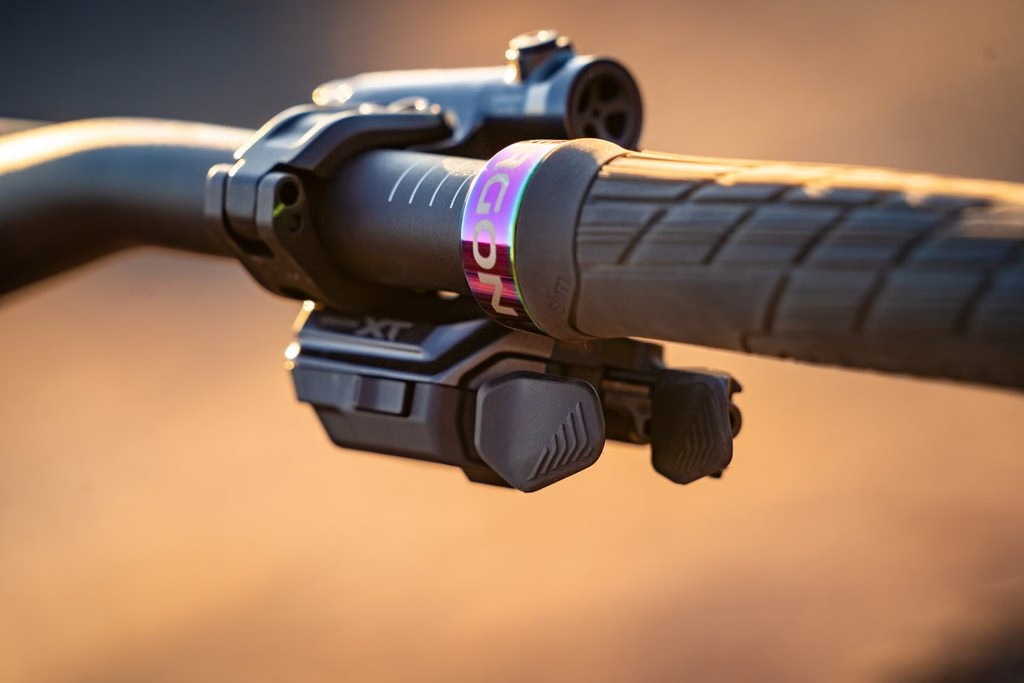
Moving a mechanical shift lever requires physical force to pull against a stiff derailleur spring—a task that can cause real hand fatigue on long, bumpy descents or multi-hour rides.
A wireless shifter pod is simply a tactile electronic switch. It requires a tiny fraction of a millimeter of movement and negligible physical pressure.
Furthermore, modern wireless ecosystems allow for deep customization via mobile apps (SRAM AXS App or Shimano E-Tube):
- Button Remapping: Swap upshift and downshift buttons, or assign a single click to control a wireless dropper post.
- Multishift Settings: Program the system to dump 2, 3, or unlimited gears when holding down the button.
- Auto-Shifting (eMTBs): When paired with eMTB motors, systems like Shimano Di2 can automatically downshift when you coast to a stop, or shift gears for you based on cadence and power output.
4. Impact Protection and Clutch Disengagement
It seems logical to assume that a complex electronic derailleur packed with sensitive circuit boards and motors would be fragile. In reality, the opposite is often true.
Traditional mechanical derailleurs are rigidly linked via a cable to your shifter lever. When a rock or stump strikes a mechanical derailleur, the impact force transfers directly into the derailleur body, parallelogram linkages, and aluminum derailleur hanger—frequently bending or snapping the hanger.
Modern wireless derailleurs feature overload clutches integrated into the servo motor drive train. When hit by a trail obstacle, the internal motor instantly disengages the gear drive, allowing the derailleur cage to pivot inward to absorb the blow before springing back to its indexed position. This motor-decoupling technology saves expensive derailleurs from destruction during hard crashes.
The Downsides and Limitations of Wireless Tech
Despite its clear advantages, wireless shifting is not without its flaws. Understanding these drawbacks is critical before making a big investment.
1. Battery Anxiety and Charging Management
The most obvious disadvantage of electronic shifting is its reliance on battery power.
- Rear Derailleur Batteries: Main drive batteries (such as SRAM AXS clip-on batteries) generally yield 20 to 25 hours of active trail riding per charge.
- Shifter Pod Batteries: Shifter controls run on standard CR2032 coin-cell batteries, which last between 1 to 2 years depending on usage.
While 25 hours is plenty of ride time, it introduces a brand-new failure point: human forgetfulness. If you forget to charge your battery after a long weekend of riding, you can easily end up at the trailhead with a completely dead drivetrain. Once that battery dies, your bike is effectively locked into a single gear ratio for the rest of the day.
2. Extreme Upfront and Replacement Costs
There is no getting around it: electronic shifting is expensive.
- A baseline mechanical drivetrain replacement kit (shifter, derailleur, cassette, chain) costs roughly $150 to $300.
- An entry-level wireless upgrade kit (shifter pod, derailleur, battery, charger) starts around $600 (e.g., SRAM GX AXS) and climbs past $1,600+ for flagship groupsets like SRAM XX SL or Shimano XTR Di2.
If a catastrophic impact does manage to tear off a wireless derailleur, replacing that single component will cost between $300 and $700—a bitter pill to swallow compared to a $45 mechanical replacement derailleur.
3. Weight Penalties
While wireless systems eliminate stainless steel cables and housing, they introduce electric servo motors, rechargeable lithium-ion batteries, thick alloy protective housings, and wireless transceivers.
When comparing equivalent tier components (for example, SRAM GX Mechanical vs. SRAM GX AXS), the wireless variant typically adds 50 to 150 grams to your bike’s total weight. For hardcore cross-country racers counting every single gram, this weight penalty can be a drawback, though high-end carbon electronic groupsets mitigate this difference significantly.
Why Cable Mechanical Shifting Still Makes Sense
With all the buzz surrounding electronic components, it is easy to assume cable-actuated drivetrains are obsolete. That could not be further from the truth. Mechanical systems retain several key advantages that make them the preferred choice for thousands of mountain bikers worldwide.
1. Unbeatable Field Repairability
If a mechanical cable snaps, frays, or gets gummed up deep in the backcountry, fixing it requires basic tools that almost every rider carries. A spare inner shift cable weighs roughly 15 grams, costs under $5, and can be installed on the side of a trail in less than ten minutes.
If a wireless electronic derailleur suffers a internal circuit board failure, a fried motor, or a crushed battery casing miles away from cell service, there is no quick trailside fix. You are coasting or pushing your bike home.
2. Tactile “Mechanical” Feedback
Some riders simply dislike the feeling of pushing a digital button to shift gears. Mechanical shifters provide direct, tactile physical feedback:
- You can feel the exact tension of the derailleur spring through your thumb paddle.
- You can feel the precise moment the ratchet pawl drops into place.
- You retain direct control over how fast or slow the derailleur moves across the cassette based on how quickly you depress the lever.
For purists who value a raw, tactile connection with their machine, mechanical shifting offers an organic engagement that buttons cannot match.
3. Incredible Value for Money
Modern mechanical drivetrains are exceptionally good. A well-adjusted 12-speed Shimano Deore M6100 or XT M8100 mechanical setup offers near-flawless gear shifts, wide range, and reliable retention for a fraction of the cost of electronic alternatives. Spending the money saved on high-quality suspension tuning, lighter wheels, or professional skills coaching often yields a bigger boost in trail speed than upgrading to wireless shifting.
Real-World Case Studies: How They Compare on the Trail
To put these systems into perspective, let’s look at how wireless and cable-actuated drivetrains perform in three common riding scenarios.
Scenario A: The Wet, Muddy Endurance Epic
You are four hours into a wet 50-mile backcountry ride. Rain is pouring, and grit is spraying off your front wheel directly into your drivetrain.
- Mechanical Reality: Water and fine mud grit migrate past the rubber seals into your outer cable housing. Cable drag increases exponentially. Shifting becomes heavy, sluggish, and requires extra thumb pressure. Up-shifts lag as the derailleur return spring struggles to overcome housing friction.
- Wireless Reality: The sealed motorized derailleur operates inside a weatherproof enclosure (typically IP67 rated). The shift speed, accuracy, and button lever feel remain 100% identical to dry conditions.
Scenario B: The Rocky Enduro Race Run
You are charging down a fast, rocky trail during a timed race run. An unseen rock flicks up, striking your rear derailleur hard.
- Mechanical Reality: The blow bends your aluminum derailleur hanger inward by just 2 degrees. Your cable tension is instantly ruined. For the remainder of your race run, your chain skips across the middle cogs, making it impossible to lay down power efficiently out of corners.
- Wireless Reality: The overload clutch inside the wireless motor disengages on impact, allowing the derailleur body to swing inward safely before re-engaging. If the hanger remains straight, your gear indexing stays spot-on. If the hanger bends slightly, you can open your smartphone app at the bottom of the trail and micro-adjust the derailleur position digitally in 10 seconds without touching a tool.
Scenario C: The Multi-Week Off-Grid Bikepacking Trip
You are embarking on a 10-day self-supported bikepacking trip through remote wilderness with no access to wall outlets.
- Mechanical Reality: You pack one spare stainless steel cable and two spare derailleur hangers. You have complete peace of mind knowing you can field-repair almost any drivetrain issue using a standard multi-tool.
- Wireless Reality: You must pack multiple charged spare batteries, a portable power bank, and charging cradles. You constantly worry about battery drainage during long days, cold weather performance drop-off, or catastrophic electronic failure miles away from civilization.
Now! We will dig deeper into the Detailed Reviews for the Shimano & SRAM Wireless Drivetrains to help you choose which system you prefer, should you decide to upgrade to Wireless…
Shimano Deore XT Di2 Wireless Drivetrain Review: Next-Gen Precision for Trail Riders
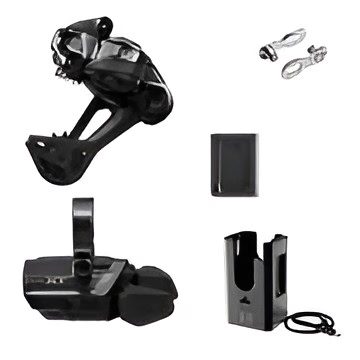
When Shimano updated its iconic Deore XT lineup with wireless Di2 technology, it set out to balance race-tier electronic performance with real-world trail durability. Long considered the “workhorse” sweet spot of mountain biking—offering 90% of XTR’s performance at a fraction of the cost—the wireless Deore XT Di2 system brings electronic shifting to a broader audience without sacrificing the legendary precision Shimano is known for.
Here is a detailed breakdown of how the wireless Shimano Deore XT Di2 drivetrain performs in terms of shift speed, ergonomics, battery integration, durability, and overall value.
Key Specifications & Architecture
- System Architecture: Wireless cockpit protocol (shifter pods communicate wirelessly to the rear derailleur)
- Shifting Technology: HYPERGLIDE+ cassette ramp profiling driven by micro-servo motors
- Ecosystem Integration: Fully configurable via the Shimano E-TUBE PROJECT smartphone app
- Battery Configuration: Dedicated high-capacity rechargeable battery unit (either internal frame mount or direct-docked depending on bike setup/eMTB integration)
- eMTB Smart Features: Supports FREE SHIFT (coastal shifting) and AUTO SHIFT when paired with Shimano STEPS drive units
- Target Discipline: Trail, All-Mountain, Enduro, and eMTB
1. Shift Performance & Speed: The HYPERGLIDE+ Advantage
The standout feature of Shimano’s wireless Deore XT Di2 is not just that it is electronic—it is how fast and aggressively it shifts under heavy pedal load.
Traditional mechanical shifting requires you to ease off pedal pressure slightly to avoid loud crunching or chain skip. Wireless Deore XT Di2 leverages HYPERGLIDE+ technology, which guides the chain both up and down the cassette teeth with incredible control.
Because the electronic motor moves the derailleur cage with absolute consistency and power, gear changes under full pedaling force feel effortless. On steep, punchy climbs where sudden downshifts are required, the chain glides onto larger cogs seamlessly without hesitation or slipping.
2. Ergonomics & Cockpit Setup
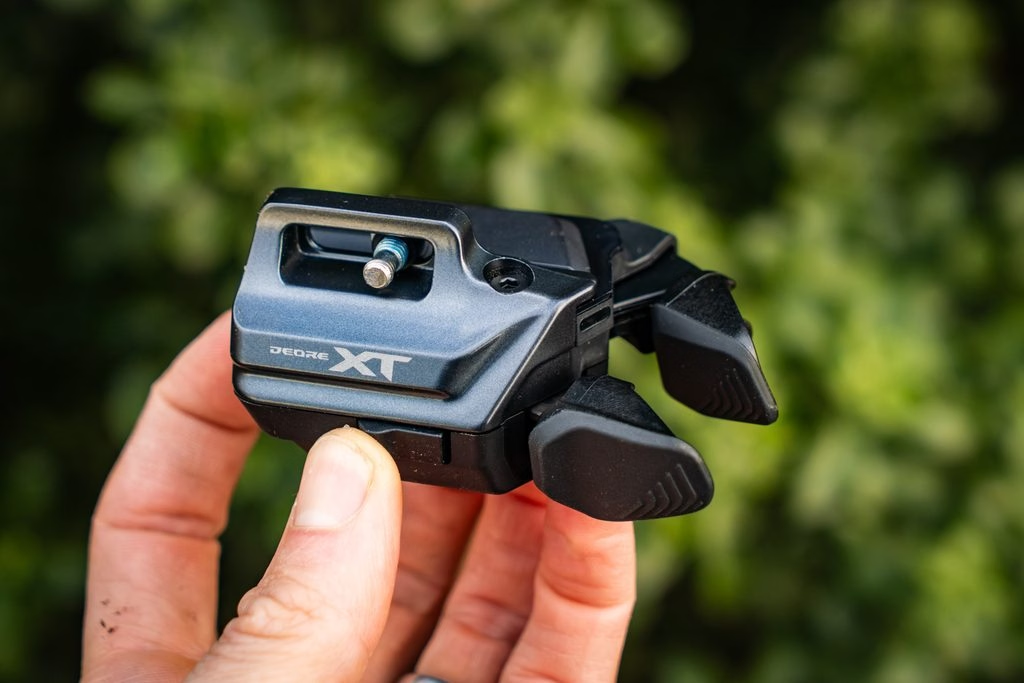
The wireless Deore XT shifter pod is a massive upgrade over older wired Di2 switches and mechanical paddles:
- Tactile Button Feel: The shifter buttons offer a distinct, short-throw click that provides positive tactile feedback, even through thick winter gloves.
- Adjustable Mounting: Compatible with I-SPEC EV mounting systems, allowing you to slide and rotate the shifter pod relative to your brake lever for dialed ergonomics.
- Minimalist Cockpit: With no shift cables or housing running from the handlebars down the frame, the front of the bike looks remarkably clean and remains silent over rough chatter.
3. Smart Tech & App Customization
Through the Shimano E-TUBE PROJECT App, riders can completely tailor the drivetrain’s behavior:
- Button Remapping: Reassign upshift and downshift commands across buttons or customize multi-shift behavior (e.g., holding down the paddle sweeps 2, 3, or unlimited gears).
- eMTB Integration: When integrated into an eMTB platform, the system unlocks FREE SHIFT (allowing the derailleur to change gears while coasting without pedaling) and AUTO SHIFT (automatically selecting the optimal gear based on speed and cadence).
4. Durability & Impact Resistance
Shimano built the Deore XT Di2 rear derailleur to handle harsh trail abuse:
- Shadow RD+ Profile: The derailleur keeps a low, tucked profile to reduce the likelihood of clipping rocks or narrow tree gaps.
- Rugged Alloy Linkages: Reinforced aluminum plates protect the internal servo motor and electronics from moisture, dust, and rock strikes.
- Chain Retention: The integrated adjustable clutch eliminates chain slap over rough rock gardens and roots, keeping the drivetrain exceptionally quiet.
5. Pros & Cons Summary
| Pros | Cons |
| Ultra-fast, crisp gear changes under heavy pedaling load | Higher upfront cost compared to mechanical XT |
| Excellent ergonomic button customization via E-TUBE app | Requires battery management and routine charging |
| Clean, wireless cockpit aesthetics | Heavier replacement cost if destroyed in a major crash |
| Seamless eMTB automatic shifting features |
The Verdict
The Shimano Deore XT Di2 Wireless Drivetrain strikes an ideal balance between high-end electronic tech and dependable trail durability. It delivers lightning-fast shifting under load, a clutter-free handlebar setup, and deep customization through Shimano’s software ecosystem. For trail and enduro riders seeking top-tier shifting performance without stepping up to ultra-expensive race-only components, Deore XT Di2 remains one of the absolute best options on the market.
SRAM Eagle AXS Wireless Drivetrain Review: Cutting-Edge Trail Performance
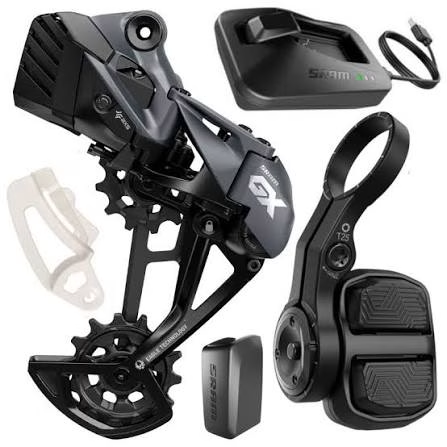
SRAM changed the mountain bike industry when it introduced the Eagle AXS ecosystem, replacing traditional stainless steel shift cables with an encrypted, wireless electronic protocol. Designed to offer instant gear changes, zero maintenance, and a clutter-free cockpit, SRAM Eagle AXS (available across GX, X01, XX1, and Transmission T-Type tiers) has established itself as the benchmark for wireless mountain bike drivetrains.
Here is an in-depth review of how the SRAM Eagle AXS wireless ecosystem performs across shift execution, trail durability, battery management, ergonomics, and long-term value.
Key Specifications & Architecture
- System Architecture: 100% cable-free wireless connectivity via SRAM’s proprietary, encrypted wireless network
- Shifting Technology: Microprocessor-controlled high-torque servo motor
- Battery Setup: Removable, clip-on lithium-ion battery on the derailleur (20–25 hours of ride time); CR2032 coin-cell battery in the controller (1–2 years)
- Software Ecosystem: Fully customizable button remapping and telemetry via the SRAM AXS App (iOS/Android)
- Protection Tech: Integrated Overload Clutch for automatic impact protection
- Water Resistance: Rated IP67 (fully sealed against dust and high-pressure water/mud spray)
1. Shifting Performance & Precision
The defining characteristic of SRAM Eagle AXS is absolute consistency. Because there are no cables to stretch, ferrules to settle, or housing lines to get gummed up with dirt, every shift executes with the exact same speed and distance down to fractions of a millimeter.
Pressing the AXS controller paddle sends an instant signal to the derailleur motor. The servo drives the chain across the cassette cogs smoothly and quietly. On standard Eagle AXS, shifting is fast and crisp. On newer T-Type Transmission variants (which mount directly to the frame’s rear axle), the shifting is synchronized with cassette shift ramps—meaning the harder you pedal on steep technical climbs, the smoother and more seamless the gear change becomes.
2. Cockpit Ergonomics & Customization
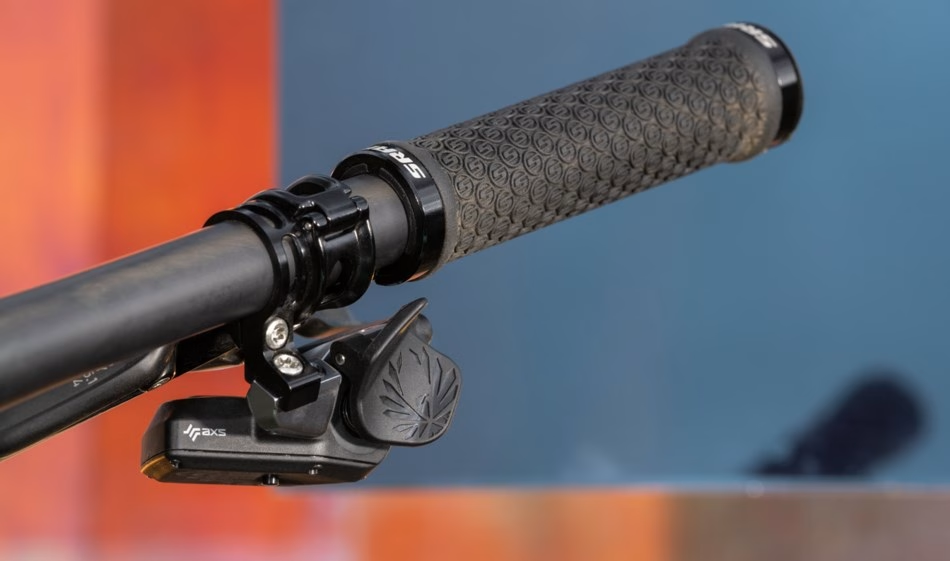
Eliminating shift cables transforms the front end of your mountain bike. With no housing entering the frame, the cockpit is clean, silent over rough trail chatter, and easy to maintain.
- AXS Controller Options: Riders can choose between the original AXS paddle or the newer, highly adjustable AXS Pod controllers. Both offer light, short-throw button actuation that drastically reduces thumb fatigue on long descents. The image above shows the AXS paddle/ rocker wireless shifter.
- SRAM AXS App Integration: Through the mobile app, you can remap button functions (e.g., swapping upshift and downshift controls), adjust multi-shift behavior (holding down the button to sweep multiple gears), and monitor precise battery percentages.
3. Trail Durability & The Overload Clutch
Wireless derailleurs are expensive, making impact protection a critical feature. SRAM engineered the Eagle AXS derailleur with an integrated Overload Clutch.
When the derailleur takes a direct strike from a rock, stump, or trail debris, the internal gearbox automatically disengages the motor drive in milliseconds. This allows the derailleur body to pivot inward to absorb the force of the blow rather than snapping the derailleur body or hanger. Once the impact passes, the motor re-engages and returns the derailleur precisely back to its indexed gear without interrupting your ride.
Furthermore, with an IP67 waterproof rating, the electronics easily handle deep water crossings, heavy mud, and high-pressure bike washes.
4. Battery Life & Real-World Maintenance
Managing batteries on the SRAM AXS system is remarkably simple:
- Derailleur Battery: The lightweight (25g) red-tab battery clips directly onto the rear of the derailleur, providing 20 to 25 hours of active ride time. Charging takes roughly 60 minutes in the USB cradle.
- Controller Battery: Powered by a common CR2032 coin-cell battery that typically lasts 1 to 2 years before needing replacement.
- Swap Capability: Because AXS batteries are universal across the entire ecosystem, you can swap batteries between an AXS dropper post (Reverb AXS) and rear derailleur on the trail if your derailleur battery runs low.
5. Pros & Cons Summary
| Pros | Cons |
| 100% cable-free setup with rapid, tool-free installation | Higher upfront investment than mechanical alternatives |
| Overload Clutch protects expensive derailleur during rock strikes | Requires charging management before long rides |
| Unmatched shift consistency in mud, rain, and grit | Replacement derailleurs are costly if destroyed |
| Modular battery design compatible across all AXS components | Slightly heavier than high-end mechanical setups |
The Verdict
The SRAM Eagle AXS Wireless Drivetrain delivers exceptional shifting performance, ultra-clean ergonomics, and proven trail durability. By eliminating mechanical cables, SRAM created a ecosystem that eliminates index tuning while offering superior shift execution under harsh conditions. Whether you opt for the value-focused GX AXS or flagship Transmission setups, Eagle AXS remains a top-tier choice for trail, enduro, and XC riders seeking high-tech performance.
Head-to-Head: SRAM Eagle AXS vs. Shimano Deore XT Di2 Wireless
Choosing between SRAM Eagle AXS and Shimano Deore XT Di2 comes down to two distinct engineering philosophies: SRAM’s focus on modular wireless simplicity versus Shimano’s emphasis on ultra-fast, high-load shifting dynamics. While both systems eliminate traditional mechanical cables, they approach power management, shift execution, and trail ergonomics differently.
Shift Performance Under Load
Shimano has long set the benchmark for shift speed under heavy pedaling pressure, and Deore XT Di2 builds on that legacy through its HYPERGLIDE+ tooth profiling. The electronic motor moves the chain across cassette shift ramps with immediate, aggressive engagement. You can shift down multiple gears while putting down max power on a steep climb without backing off pedal torque.
SRAM’s standard Eagle AXS shifts exceptionally fast, but its newer T-Type Transmission variants take a slightly different approach: the system synchronizes shift timing to pause for fractions of a second until cassette ramps align. This results in an incredibly smooth, crunch-free shift under load, though the shift execution feels slightly deliberate compared to Shimano’s instantaneous response.
System Architecture and Battery Design
System design is where these two ecosystems diverge most sharply:
- SRAM Eagle AXS: Operates on a 100% wireless, self-contained architecture. The derailleur carries its own small, removable 25-gram lithium-ion battery (20–25 hours of ride time), while the controller uses a CR2032 coin-cell battery. The advantage is total modularity: you can swap batteries between your derailleur and an AXS Reverb seatpost in seconds on the trail, or pack a 25-gram spare battery in your pocket.
- Shimano Deore XT Di2: Uses wireless connectivity for the handlebar shifter pod, but relies on a dedicated, high-capacity central or direct-docked battery for the derailleur itself. This setup offers longer runtimes (30–40+ hours) and deeper integration with eMTB motors, enabling smart features like FREE SHIFT (shifting while coasting) and AUTO SHIFT. However, it sacrifices the plug-and-play modularity of SRAM’s clip-on batteries.
Trail Durability and Ergonomics
Both systems are built for aggressive trail use, but they handle impact protection differently. SRAM features a dedicated Overload Clutch that automatically disengages the servo motor upon impact, allowing the derailleur body to swing inward to absorb rock strikes before returning to position. Shimano relies on its low-profile Shadow RD+ geometry and reinforced aluminum linkages to deflect trail debris and prevent damage.
At the handlebar, SRAM offers the customizable AXS Pod with adjustable mounting options, giving it a minimalist feel. Shimano’s Deore XT Di2 controller utilizes an I-SPEC EV mount with a short-throw, tactile click that mimics the firm, mechanical feel long-time Shimano riders prefer.
| Feature | SRAM Eagle AXS | Shimano Deore XT Di2 Wireless |
| Wireless Architecture | 100% Fully Wireless | Wireless Cockpit / Direct Motor Power |
| Shift Timing Style | Controlled, synchronized ramp alignment | Instantaneous HYPERGLIDE+ speed |
| Impact Protection | Automatic Overload Motor Clutch | Low-profile Shadow RD+ design |
| Best For | Modular simplicity & clean installations | Raw shift speed & eMTB auto-features |
The Verdict
If you prioritize a clean setup, modular battery swaps, and auto-disengaging crash protection, SRAM Eagle AXS is the pinnacle of wireless convenience. If your priority is lightning-fast shifts under heavy pedaling force, robust eMTB software features, and a tactile lever click, Shimano Deore XT Di2 Wireless delivers exceptional performance.
Also! You must not forget to consider personal preference of brand!! And, as I have mentioned in other articles, I personally prefer the relaibility and efficiency of Shimano over SRAM after a couple of “not good” experiences with SRAM drivetrains!
Future Trends: Where Is MTB Drivetrain Tech Heading?
As wireless technology matures, the line between mechanical simplicity and electronic performance continues to blur.
Direct-Mount Drivetrains (The End of the Hanger)
SRAM’s Transmission (T-Type) platform has effectively eliminated the traditional derailleur hanger altogether. By mounting the rear derailleur directly to the bike’s frame around the rear wheel axle (utilizing Universal Derailleur Hanger frame geometry), these wireless derailleurs achieve unprecedented structural stiffness. This setup allows for precise shifting under full eMTB motor loads that would easily destroy standard mechanical drivetrains.
Motor-Gearbox Units (MGUs)
The next major frontier in mountain bike tech is the integration of high-range electronic gearboxes directly into mid-drive electric bike motors (such as the Pinion E-Drive MGU). These systems replace external rear derailleurs, cassettes, and shift cables entirely with a fully enclosed, electronically shifted internal transmission sealed inside the frame bottom bracket.
With zero external derailleurs to smash on rocks and zero shift cables to replace, internal electronic gearboxes represent the ultimate realization of low-maintenance shifting.
Buying Guide & Decision Framework
Still undecided? Use this decision matrix to determine which drivetrain technology suits your riding style, budget, and mechanical aptitude best.
Drivetrain Decision Matrix
Which system aligns best with your riding style, budget, and terrain?
Go Wireless Electronic
- Budget: You have $600+ to invest in drivetrain upgrades.
- Shift Precision: You want crisp shifts under full pedaling power on punchy climbs.
- Maintenance: You hate fine-tuning cable tension, barrel adjusters, and internal routing.
- Cockpit: You prefer a clean, minimal handlebar setup with no shift housing.
Stick with Mechanical
- Budget: You want top-tier shifting performance under $300.
- Adventure: You regularly ride off-grid or multi-day bikepacking trips.
- Repairability: You prefer fixing gear on the trail with standard hand tools.
- Simplicity: You don’t want to manage or charge batteries before rides.
Upgrade to Wireless Electronic Shifting If:
- You want effortless shifting under load: You frequently ride steep, punchy trails where shifting while putting down full power is critical.
- You despise routing and tuning cables: You want a clean cockpit and hate fiddling with barrel adjusters, cable stretch, and housing replacements.
- You value customized control: You enjoy remapping buttons, fine-tuning shift speed, and integrating your drivetrain with smartphone apps.
- You ride in harsh, muddy conditions: You need a weatherproof system that shifts with identical precision regardless of rain, grit, or mud.
Stick with Cable Mechanical Shifting If:
- You demand maximum bang-for-your-buck: You prefer allocating your upgrades toward lighter carbon wheels, high-end suspension, or riding trips.
- You are a backcountry bikepacker: You need a drivetrain that is lightweight, simple, and easily repairable with basic hand tools anywhere on earth.
- You prefer tactile mechanical feedback: You enjoy feeling the mechanical click, spring tension, and physical engagement of a cable-actuated shift lever.
- You don’t want to manage batteries: You already have too many devices to charge and don’t want to risk forgetting a bike battery before a ride.
Final Verdict
Wireless electronic shifting is not a gimmick. It offers real, measurable improvements in shift speed, precision under load, system durability, and overall cockpit ergonomics. For riders who spend heavily on their equipment and demand crisp performance on every single shift, electronic drivetrains are well worth the investment.
However, mechanical cable shifting remains the reliable backbone of mountain biking. It offers outstanding reliability, simple maintenance, and field repairability at a cost that keeps the sport accessible.
Whichever path you choose, modern drivetrain technology—whether powered by steel cables or lithium batteries—has never been better. Pick the system that aligns with your budget and riding habits… and personal brand preference!
Keep your chain clean, and get out on the trail!